
Introduction
Modern businesses increasingly face the challenge of managing complex financial operations across multiple platforms. From tracking expenditures and handling payroll to managing multi-currency accounts and global payments, inefficiencies can quickly escalate costs and create operational bottlenecks. The need for integrated solutions that consolidate financial workflows has become central to contemporary business management.
What Is Aspire?
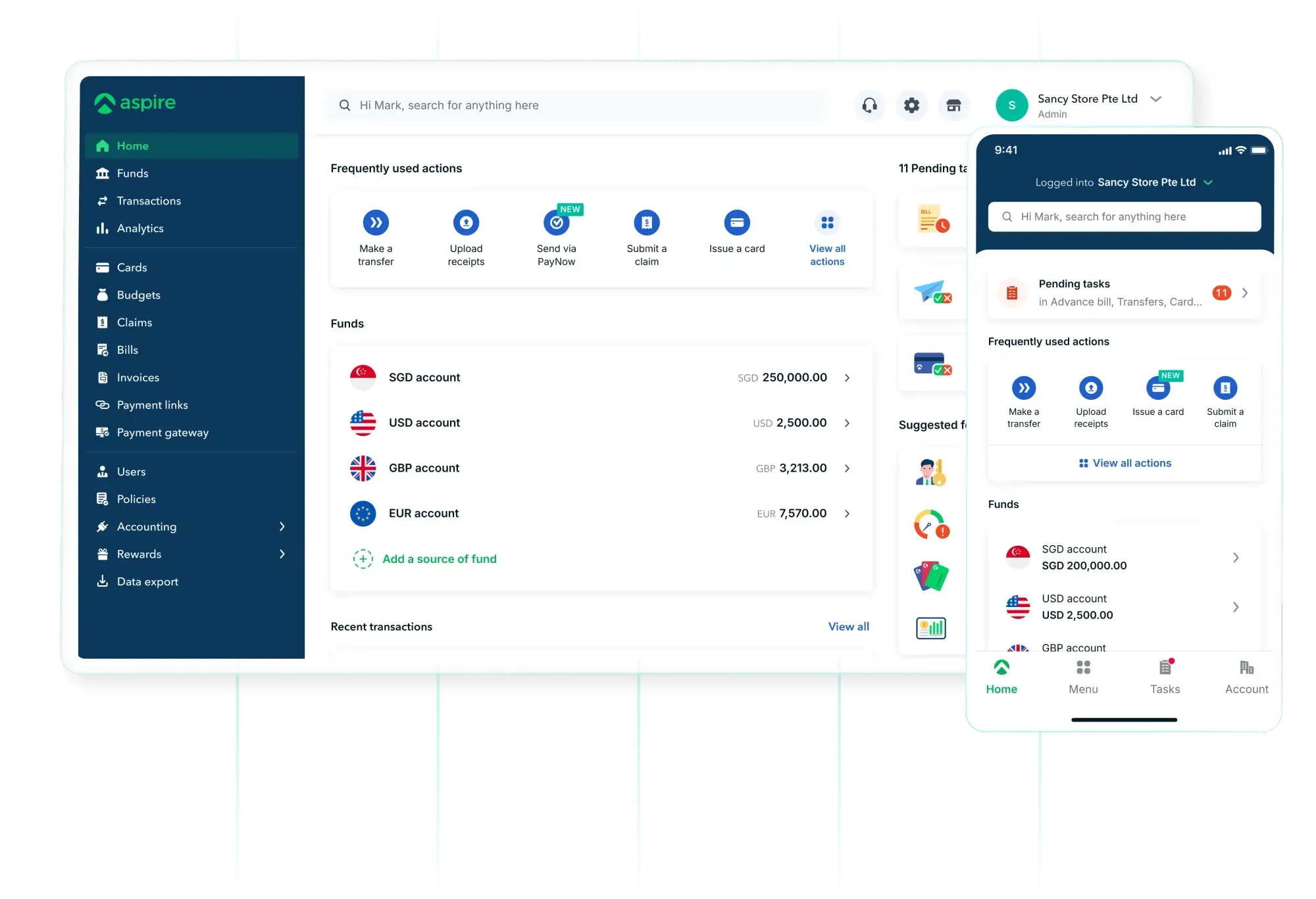
Aspire is a cloud-based financial platform designed to centralize and automate business financial operations. It combines multi-currency accounts, corporate card management, global payment processing, and treasury functionalities into a single interface. Classified under business finance management and fintech solutions, Aspire aims to reduce manual intervention and streamline accounting processes for startups, SMEs, and mid-sized companies.
Key Features Explained
Aspire’s platform offers a variety of functionalities:
-
Business Accounts: Supports multi-currency deposits and allows seamless international transactions, simplifying cross-border operations.
-
Corporate Cards: Provides both physical and virtual cards for employees, enabling precise expense tracking and spending controls.
-
Expense Management: Automates the categorization of expenditures and provides real-time insights into company spending.
-
Yield and Treasury Management: Offers mechanisms to unlock returns on idle funds, with liquidity accessible within a short period.
-
Payroll Integration: Streamlines salary disbursement for employees while ensuring compliance with local regulations.
-
Global Payments and FX Management: Facilitates cost-efficient foreign exchange transactions and international transfers.
-
API and Integrations: Connects with accounting and ERP software to enable comprehensive data synchronization and reporting.
Common Use Cases
Aspire is particularly useful for businesses that operate internationally or manage distributed teams. Startups benefit from simplified expense management and card issuance, allowing founders to maintain tighter control over company spending. SMEs can leverage automated reporting and payroll integration to reduce administrative overhead. Mid-sized companies often utilize Aspire’s APIs to integrate financial data into internal systems, improving forecasting, budgeting, and auditing processes.
Potential Advantages
Centralizing financial operations on Aspire can lead to:
-
Operational Efficiency: Reduced manual reconciliation and streamlined workflows improve productivity.
-
Financial Visibility: Real-time dashboards and reporting offer transparency for CFOs and finance teams.
-
Cost Management: Controlled spending through corporate cards and automated approvals helps maintain budgets.
-
Scalability: Flexible solutions accommodate growing teams and expanding international operations.
-
Integration Capabilities: Seamless connectivity with existing accounting and ERP platforms reduces software fragmentation.
Limitations & Considerations
Despite its broad functionality, Aspire may present challenges:
-
Learning Curve: Teams may require time to adapt to the unified platform and explore all features effectively.
-
Feature Overlap: Companies already using specialized software for accounting or treasury management might encounter redundant functionalities.
-
Regional Constraints: Some services may be limited to specific geographies or regulatory frameworks.
-
Dependence on Internet Connectivity: As a cloud-based platform, Aspire’s accessibility is tied to stable internet connections.
Who Should Consider Aspire
Businesses that could derive significant benefits from Aspire include:
-
Startups aiming for simplified, integrated financial management.
-
SMEs requiring automated expense and payroll operations.
-
Mid-sized enterprises needing multi-currency accounts and global payment capabilities.
-
Finance teams seeking real-time visibility and operational control over company spending.
Who May Want to Avoid It
Aspire might not suit:
-
Small businesses with very limited transactions that do not require complex financial tools.
-
Organizations heavily reliant on on-premises accounting systems without integration needs.
-
Firms in regions where Aspire’s services are not fully supported due to regulatory or operational limitations.
Comparison With Similar Tools
Within the business finance management space, Aspire competes with other fintech platforms offering multi-currency accounts, corporate cards, and expense management:
-
Unlike traditional banking platforms, Aspire consolidates multiple financial functions under one dashboard, reducing platform switching.
-
Compared to specialized expense software, Aspire integrates payroll, treasury, and global payments, providing a more holistic financial view.
-
Against competitors like standard accounting ERPs, Aspire emphasizes real-time control and scalability for growing businesses, particularly those with international operations.
Final Educational Summary
Aspire exemplifies a modern approach to business finance management, offering an all-in-one solution for companies managing complex financial workflows. Its combination of multi-currency accounts, corporate card management, global payments, and treasury functionalities provides a cohesive platform for operational efficiency and financial visibility. While adoption requires consideration of organizational needs and readiness for a cloud-based system, Aspire presents a valuable option for startups, SMEs, and mid-sized companies seeking integrated financial solutions.
Disclosure
Disclosure: This article is for educational and informational purposes only. Some links on this website may be affiliate links, but this does not influence our editorial content or evaluations.
