
Introduction
In contemporary business environments, small and medium-sized enterprises (SMEs) frequently encounter challenges managing the influx of financial documents. Receipts, invoices, and statements accumulate rapidly, demanding consistent attention for accurate bookkeeping. Traditional manual processes are labor-intensive, prone to human error, and often delay critical financial insights. Consequently, software solutions that automate bookkeeping tasks have emerged, aiming to improve efficiency, accuracy, and accessibility. Among these solutions, Dext has gained attention for its AI-powered approach to financial document management.
What Is Dext?
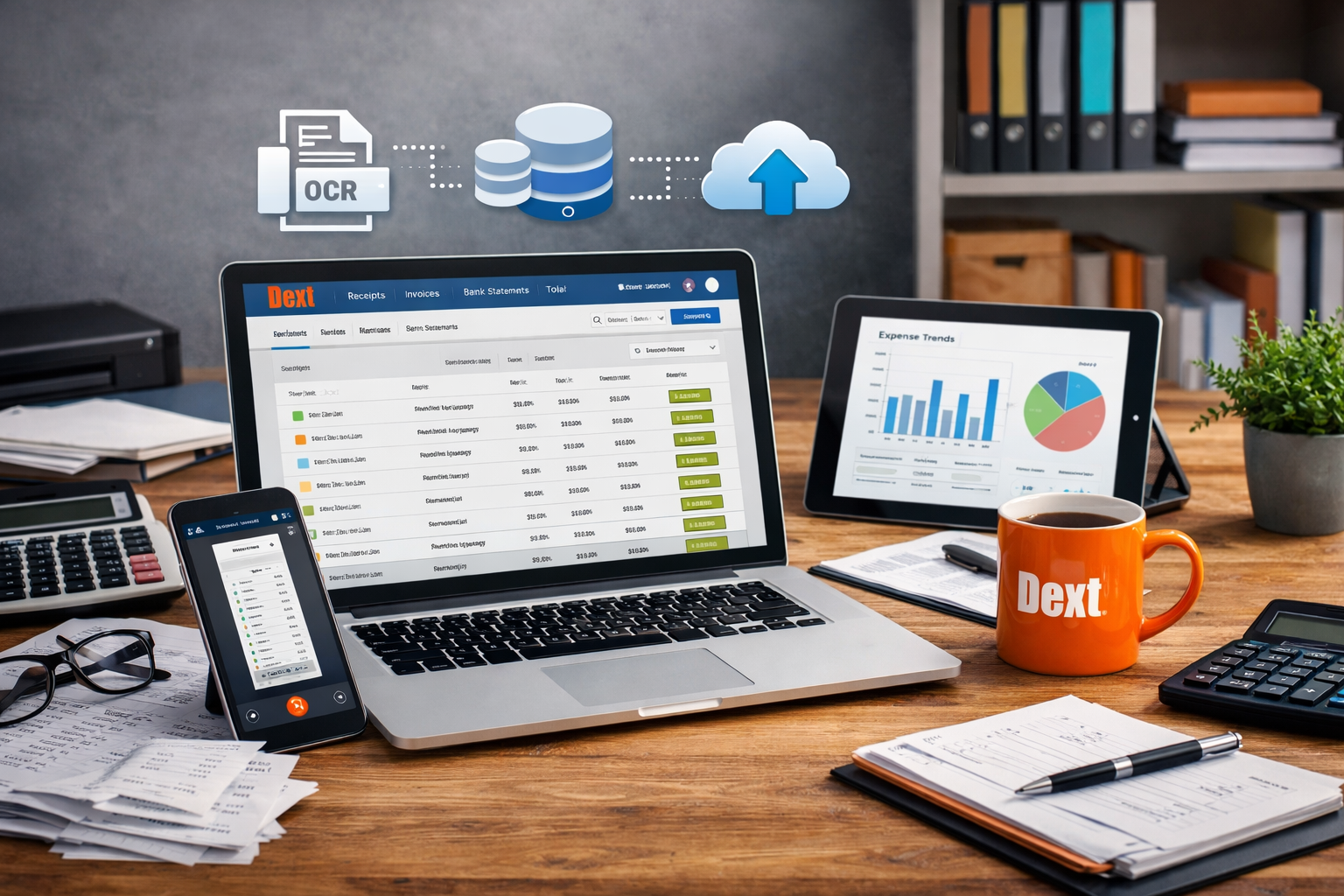
Dext is a cloud-based bookkeeping and expense management platform designed to automate the collection, categorization, and processing of financial documents. Primarily targeting SMEs, accountants, and bookkeepers, Dext integrates seamlessly with various accounting software systems, offering real-time synchronization of financial data. By leveraging artificial intelligence, the platform reduces the need for manual data entry and enhances the accuracy of financial records.
Dext falls within the broader category of bookkeeping automation software. Unlike basic accounting tools that rely on user input for data entry, Dext actively extracts key information from documents and organizes it according to predefined financial categories. This classification capability distinguishes it from conventional software and positions it as a tool that directly addresses administrative inefficiencies.
Key Features Explained
Dext provides a suite of functionalities designed to streamline the bookkeeping process:
-
Receipt and Invoice Capture: Users can submit receipts and invoices through multiple channels, including mobile apps, email, or direct upload. Dext’s AI scans and extracts pertinent data with high accuracy.
-
Automatic Categorization: Extracted financial information is classified automatically, reducing manual reconciliation efforts.
-
Accounting Software Integration: Dext connects with over 30 popular accounting platforms, allowing for real-time synchronization and seamless data transfer.
-
Expense Management: The platform tracks employee expenses, including mileage, and maintains a digital audit trail.
-
Document Storage and Collaboration: Dext provides secure storage and facilitates collaboration among accounting teams and clients, improving workflow transparency.
-
Multi-Channel Data Capture: The system supports document submissions from various sources, ensuring comprehensive data coverage.
Common Use Cases
Dext serves a range of scenarios within financial management:
-
Small Business Bookkeeping: SMEs can use Dext to automate invoice and receipt processing, minimizing manual administrative work.
-
Accounting Practices: Firms managing multiple clients can streamline document handling and improve client data accuracy.
-
Expense Tracking: Businesses with distributed teams can monitor and approve employee expenses efficiently.
-
Financial Reporting Preparation: By ensuring accurate categorization and storage of documents, Dext facilitates timely report generation and compliance.
-
Audit Readiness: The platform’s digital audit trail aids businesses in maintaining comprehensive records for regulatory purposes.
Potential Advantages
The adoption of Dext may offer several operational benefits:
-
Time Efficiency: Automation reduces hours spent on repetitive bookkeeping tasks.
-
Accuracy Enhancement: AI-driven extraction minimizes data entry errors.
-
Integration Flexibility: Compatibility with numerous accounting systems supports diverse financial workflows.
-
Document Organization: Centralized storage and categorization simplify record retrieval and review.
-
Remote Accessibility: Cloud-based architecture allows users to access and manage financial documents from any location.
Limitations & Considerations
While Dext provides extensive automation, certain considerations are necessary:
-
Learning Curve: Users may require initial training to navigate platform features effectively.
-
Dependence on AI Accuracy: Although AI reduces errors, occasional misclassifications may occur, necessitating manual review.
-
Subscription Costs: Small businesses must assess whether recurring fees align with budget constraints.
-
Integration Limitations: Not all accounting platforms or banking institutions may be fully compatible with Dext, potentially restricting its utility for certain users.
-
Internet Dependency: As a cloud-based tool, continuous internet access is required for optimal functionality.
Who Should Consider Dext
Dext is most suitable for:
-
SMEs seeking to reduce manual bookkeeping efforts.
-
Accounting firms managing multiple client accounts.
-
Businesses that prioritize real-time financial data access.
-
Organizations aiming to improve document organization and audit readiness.
Who May Want to Avoid It
Dext may not be ideal for:
-
Micro-enterprises with minimal document processing needs.
-
Businesses with limited internet connectivity or restrictive IT policies.
-
Users seeking a purely offline bookkeeping solution.
Comparison With Similar Tools
Dext shares the market with several bookkeeping automation solutions, including Receipt Bank (now part of the same brand family), Expensify, and Hubdoc. Key differentiators include:
-
AI Accuracy: Dext emphasizes near-real-time extraction with high accuracy rates.
-
Integration Range: Extensive connectivity with accounting software surpasses many alternatives.
-
Document Storage Capabilities: Unlike some competitors, Dext combines capture, storage, and collaborative review in a single platform.
While competitors may offer specialized features in expense management or invoice automation, Dext’s strength lies in its comprehensive approach to bookkeeping automation.
Final Educational Summary
Dext represents a sophisticated tool for modern bookkeeping, emphasizing automation, accuracy, and integration. Its AI-powered system addresses common challenges in document management and financial data handling, particularly for SMEs and accounting professionals. By streamlining repetitive tasks and centralizing financial records, Dext contributes to operational efficiency and improved oversight. However, users must balance the platform’s capabilities against cost, integration requirements, and reliance on internet connectivity. Overall, Dext provides a research-backed, analytical solution within the evolving landscape of bookkeeping automation tools.
Disclosure
Disclosure: This article is for educational and informational purposes only. Some links on this website may be affiliate links, but this does not influence our editorial content or evaluations.
