
Introduction
The digital commerce landscape has transformed significantly over the last decade, particularly in how creators, entrepreneurs, and small businesses distribute products online. With the proliferation of digital goods, print-on-demand items, and subscription-based services, there is an increasing demand for intuitive, low-barrier tools that facilitate online sales. One category of solutions addresses the challenge of building and managing online stores without extensive technical knowledge. Tools like Sellfy have emerged to meet this need, providing platforms for creators to sell digital and physical products while minimizing friction in the setup and transaction process.
The rise of such platforms reflects broader industry trends, including the democratization of e-commerce, the expansion of the creator economy, and the ongoing shift toward remote and decentralized business models. By analyzing Sellfy in detail, this article aims to provide a structured, educational perspective on its functionality, applications, and implications within the e-commerce ecosystem.
What Is Sellfy?
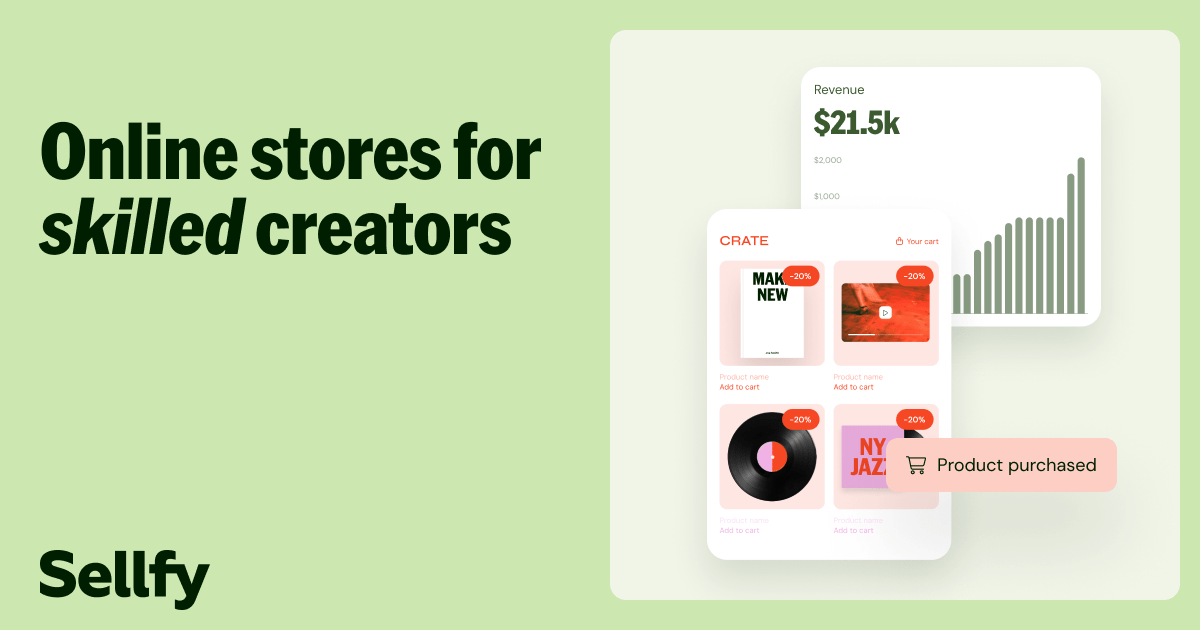
Sellfy is an online commerce platform designed to enable individuals and small businesses to sell digital products, physical merchandise, and subscription services. Unlike traditional e-commerce platforms that may require technical expertise or complex backend management, Sellfy offers a code-free, template-driven environment. Its primary function is to simplify store creation, product management, and transaction processing. The platform positions itself within the broader category of e-commerce store builders and creator-focused sales solutions.
Sellfy operates on a SaaS (Software-as-a-Service) model, meaning that users access the platform via a web browser without the need to host software locally. This model supports scalability and accessibility, particularly for creators who require a fast, straightforward path to monetization.
Key Features Explained
Sellfy encompasses a range of features aimed at supporting diverse e-commerce activities:
-
Digital Product Sales: Sellfy allows creators to upload and sell digital items, such as e-books, music, videos, and design assets. File sizes of up to 20GB are supported, accommodating a variety of content types.
-
Print-on-Demand Services: Users can design and sell custom merchandise without upfront inventory. The platform integrates with multiple fulfillment centers, automating production and shipping logistics.
-
Subscription Management: The subscription feature enables recurring revenue through weekly, monthly, or yearly payment plans. This is suitable for digital magazines, online courses, or exclusive content distribution.
-
Drag-and-Drop Store Builder: Sellfy provides a visual interface for creating and customizing storefronts, reducing reliance on coding skills.
-
Marketing Automation Tools: The platform includes email marketing campaigns, affiliate program management, upselling features, and SEO support to help sellers enhance their reach and visibility.
-
Checkout and Payment Integration: Sellfy supports multiple payment gateways, including PayPal, Stripe, and major card options, as well as Apple Pay and Google Pay for faster transactions.
Common Use Cases
Sellfy is particularly relevant in several e-commerce scenarios:
-
Independent Creators: Artists, musicians, writers, and software developers seeking to monetize digital products.
-
Subscription-Based Services: Online educators or content creators offering recurring access to resources or courses.
-
Small Retail Businesses: Entrepreneurs selling niche physical products or print-on-demand merchandise.
-
Hybrid Stores: Individuals combining digital products, subscriptions, and physical items in a single storefront.
The flexibility of Sellfy’s platform allows a single user to manage multiple product types and revenue streams under one interface, streamlining operations for micro and small-scale businesses.
Potential Advantages
Sellfy presents several potential advantages for users:
-
Ease of Use: The platform’s visual editor and pre-designed templates lower the barrier to entry for non-technical users.
-
Integration of Multiple Product Types: By supporting digital goods, subscriptions, and physical products simultaneously, Sellfy provides a unified sales environment.
-
Automated Operations: Fulfillment, recurring billing, and some marketing functions are automated, reducing operational complexity.
-
Accessibility: Being web-based, Sellfy allows users to manage their stores from any location with internet access.
-
Scalable File Support: Large digital assets can be hosted and delivered efficiently.
These aspects position Sellfy as a versatile option for creators and small businesses seeking streamlined e-commerce operations.
Limitations & Considerations
Despite its advantages, Sellfy also presents limitations:
-
Feature Depth: While convenient, the simplicity of the platform may not meet the advanced customization needs of larger e-commerce operations.
-
Platform Dependency: Users rely on Sellfy’s infrastructure, which may limit control over hosting and backend processes.
-
Marketing Constraints: While basic marketing tools are included, sophisticated campaigns may require integration with external solutions.
-
Cost Structure: Subscription plans may not be optimal for all creators, particularly those just starting and evaluating ROI.
Understanding these limitations is critical for making an informed decision about the suitability of Sellfy for a given business model.
Who Should Consider Sellfy
Sellfy is most appropriate for:
-
Solo creators or micro-businesses aiming to sell digital products or merchandise quickly.
-
Entrepreneurs seeking a low-tech entry point into e-commerce.
-
Content producers looking for subscription monetization options.
-
Small-scale sellers who benefit from integrated checkout and fulfillment services.
The platform’s design philosophy aligns with users prioritizing speed, simplicity, and operational automation over extensive technical customization.
Who May Want to Avoid It
Sellfy may be less suitable for:
-
Enterprises requiring complex, enterprise-grade e-commerce functionalities.
-
Businesses with highly specialized branding needs or custom backend integrations.
-
Sellers prioritizing advanced analytics or multi-channel integrations beyond the platform’s scope.
For these users, alternative e-commerce solutions with higher configurability or enterprise-level features might be more appropriate.
Comparison With Similar Tools
Sellfy operates in a competitive landscape alongside platforms like Gumroad, Shopify, and Subbly. Compared to these alternatives:
-
Gumroad emphasizes simplicity but has higher transaction fees for some tiers.
-
Shopify offers extensive customization, third-party app integrations, and advanced analytics, but requires more technical setup.
-
Subbly focuses on subscription-based e-commerce, which may be preferable for recurring revenue but less flexible for single-product sales.
Sellfy differentiates itself through its combined support for digital products, subscriptions, and physical merchandise, along with an integrated marketing and checkout workflow.
Final Educational Summary
Sellfy exemplifies the evolution of creator-focused e-commerce platforms, responding to industry demand for accessible, multi-product online store solutions. By supporting digital goods, print-on-demand items, and subscriptions under a single interface, the platform allows small businesses and creators to consolidate operations. While its simplicity and automation are advantageous, potential users must weigh the platform’s limitations in customization and advanced marketing capabilities. As the e-commerce ecosystem continues to evolve, tools like Sellfy offer a practical entry point for individuals seeking to establish an online presence without extensive technical expertise.
Disclosure
Disclosure: This article is for educational and informational purposes only. Some links on this website may be affiliate links, but this does not influence our editorial content or evaluations.
