
Introduction
Businesses increasingly manage customer interactions across multiple communication channels. Phone calls, text messages, emails, and chat conversations now occur simultaneously, often requiring rapid responses and accurate information delivery. Managing these interactions manually can become complex, particularly for organizations handling high communication volumes.
To address this challenge, a category of software known as AI communication automation platforms has developed. These systems use artificial intelligence technologies such as natural language processing, speech recognition, and workflow automation to help manage conversations between businesses and their customers.
Rather than replacing human interaction entirely, these platforms typically focus on handling repetitive or structured tasks. Examples include answering common questions, scheduling appointments, routing inquiries, or collecting basic information from callers.
Within this technological landscape, Vida AI Agent OS, developed by Vida Global Inc., represents an example of an AI agent operating system designed to automate communication tasks through configurable AI agents. The platform allows organizations to build automated agents capable of interacting with users through voice calls, messaging systems, and digital chat environments.
Understanding how platforms like Vida AI Agent OS function can provide insight into the broader evolution of AI-driven communication tools and enterprise workflow automation systems.
What Is Vida AI Agent OS?
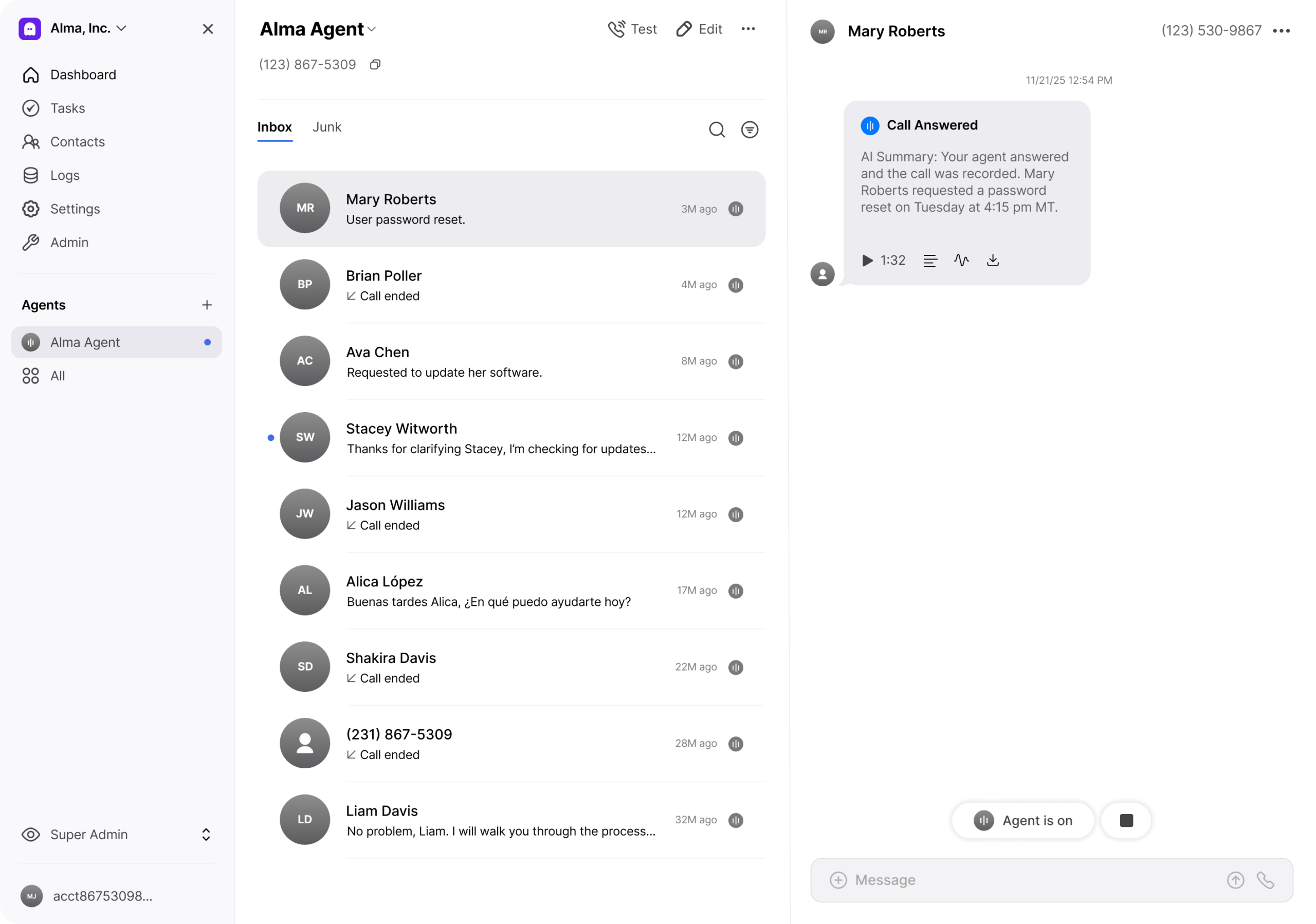
Vida AI Agent OS is a software platform designed to create, deploy, and manage artificial intelligence agents that can interact with users across different communication channels. The system is built to support voice conversations, text messaging, email exchanges, and chat-based interactions within a single operational environment.
In practical terms, Vida AI Agent OS acts as an infrastructure layer where organizations can design automated conversational workflows. These workflows allow AI agents to handle routine communication tasks, retrieve data from connected systems, and respond to inquiries based on predefined logic or AI-generated responses.
The platform belongs to a broader class of tools sometimes referred to as:
-
AI agent infrastructure platforms
-
conversational AI operating systems
-
AI communication automation software
-
AI phone agent platforms
Unlike basic chatbot tools that focus primarily on website messaging, Vida AI Agent OS supports voice-based communication, enabling AI agents to participate in phone calls as well as text interactions.
Another distinguishing aspect of the platform is its ability to integrate with external business systems. This means AI agents can access scheduling systems, customer databases, or service platforms while interacting with users.
In this sense, Vida AI Agent OS functions not simply as a communication tool but as a system that connects conversation interfaces with operational workflows.
Key Features Explained
AI Agent Development Environment
One of the primary components of Vida AI Agent OS is its environment for building AI agents. Organizations can configure conversational behavior, response logic, and workflow triggers within the platform.
Instead of relying entirely on traditional programming, the system allows structured configuration of conversation flows. This approach places the platform in the low-code AI development tools category, where technical teams can design automation systems without building every component from scratch.
Voice-Based AI Interaction
A distinctive feature of Vida AI Agent OS is its support for AI voice agents. These agents can participate in phone calls, interpret spoken language, and generate voice responses.
Voice automation is particularly relevant for industries where telephone communication remains a primary interaction channel. AI voice agents can answer calls, collect information, or direct callers to appropriate departments.
Speech recognition and text-to-speech technologies enable these interactions.
Omnichannel Communication Management
Many organizations communicate with customers through several channels simultaneously. Vida AI Agent OS supports an omnichannel communication model, meaning that the same AI agent can interact with users through:
-
phone calls
-
SMS messages
-
email communication
-
website chat interfaces
Managing these interactions within a single platform can help organizations track conversations across different communication methods.
Integration With Business Systems
Another important capability of Vida AI Agent OS is its integration framework. AI agents often need access to data stored in external systems in order to respond accurately to inquiries.
The platform can connect with tools such as:
-
customer relationship management systems
-
scheduling platforms
-
internal databases
-
helpdesk or ticketing software
-
external APIs
Through these integrations, an AI agent might check appointment availability, retrieve account information, or log interaction details automatically.
AI Model Flexibility
Vida AI Agent OS supports the use of multiple AI models rather than being tied to a single provider. This approach allows organizations to choose models based on factors such as performance, cost, or specific capabilities.
In the context of enterprise AI deployment, model flexibility can be important because artificial intelligence technology evolves rapidly. The ability to integrate different models allows the platform to adapt as new AI systems become available.
Monitoring and Performance Analysis
Automated communication systems require ongoing monitoring to ensure they operate correctly. Vida AI Agent OS includes analytical tools designed to provide insight into agent performance.
Typical monitoring metrics may include:
-
number of conversations handled
-
interaction success rates
-
conversation duration
-
escalation frequency to human agents
These metrics help organizations evaluate how AI agents perform in real-world communication scenarios.
Security and Compliance Framework
Enterprise software platforms frequently operate in environments where data security and regulatory compliance are important. Vida AI Agent OS includes infrastructure designed to support secure data handling practices.
Security features may include encryption, user access control, and activity logging. These mechanisms are intended to help organizations maintain oversight of how communication data is processed and stored.
Common Use Cases
AI agent operating systems can be applied in a variety of operational contexts. The following examples illustrate situations where communication automation may be used.
Customer Support Assistance
Organizations receiving frequent support inquiries often deploy AI agents to assist with basic requests. These requests may include simple information questions or routing inquiries to the appropriate department.
The AI agent can gather initial details before transferring complex cases to human representatives.
Appointment Scheduling and Management
Businesses that rely on scheduled services frequently manage appointment bookings. AI agents can communicate with customers to coordinate scheduling tasks.
These tasks may involve checking availability, confirming bookings, or sending reminders before appointments.
Call Routing and Information Collection
When large numbers of incoming calls occur, organizations may use automated agents to route callers to the correct department.
An AI agent might ask structured questions and forward the call based on the caller’s responses.
Lead Qualification Processes
In some industries, AI agents are used to gather information from prospective customers. By asking a sequence of questions, the system can categorize inquiries and identify which leads require follow-up from human sales representatives.
Workflow Triggering and Automation
Conversations sometimes trigger internal actions within a business system. Vida AI Agent OS can connect communication events with automated workflows.
For example, a conversation may trigger:
-
creation of a support ticket
-
updating a CRM record
-
sending automated follow-up messages
These workflows help streamline administrative tasks associated with communication management.
Potential Advantages
Handling High Interaction Volumes
AI agents can manage multiple conversations simultaneously. This capability allows organizations to process large communication volumes without requiring proportional increases in staffing.
Continuous Availability
Automated systems can operate continuously, allowing organizations to respond to inquiries outside regular working hours.
This may be useful for companies serving international audiences or operating across multiple time zones.
Standardized Information Delivery
AI agents deliver responses based on predefined logic or structured data sources. This approach may lead to consistent answers when addressing frequently asked questions.
Integration With Operational Systems
Connecting conversation platforms with backend systems enables AI agents to perform tasks beyond simple messaging. The integration of data retrieval and workflow automation expands the potential scope of automated communication systems.
Limitations & Considerations
Complexity of Deployment
Implementing an enterprise AI communication platform may require technical expertise. Integration with existing software systems can involve configuration work and testing.
Organizations must plan implementation carefully to ensure that automated workflows operate correctly.
Conversational Limitations
Although AI language models have improved substantially, automated systems can still struggle with nuanced communication scenarios. Complex or ambiguous questions may require human intervention.
Maintaining escalation pathways to human representatives remains an important design consideration.
Data Management Requirements
AI agents rely on accurate data sources to generate reliable responses. If the underlying information systems contain incomplete or outdated data, the AI agent may deliver incorrect information.
Maintaining clean and reliable datasets is therefore essential.
Privacy and Regulatory Considerations
Organizations must consider how communication data is stored, processed, and protected. Regulations governing personal information may influence how AI communication platforms are deployed.
Ensuring compliance with relevant privacy frameworks is a necessary step when implementing automated communication systems.
Who Should Consider Vida
Vida AI Agent OS may be relevant for organizations that manage structured communication processes and high interaction volumes.
Potential users include:
-
enterprise customer support operations
-
service organizations managing phone inquiries
-
technology companies integrating AI communication capabilities
-
businesses offering automated communication services to clients
-
organizations seeking to connect conversational interfaces with workflow automation
Industries such as healthcare services, telecommunications, professional services, and logistics often explore AI communication systems due to the frequency of customer interactions.
Who May Want to Avoid It
Not every organization requires a large-scale AI communication infrastructure.
Vida AI Agent OS may be less appropriate for:
-
very small businesses with minimal communication demands
-
organizations lacking technical teams to manage integrations
-
teams preferring fully human-managed communication processes
-
companies operating in regulatory environments that limit automated interactions
In such cases, simpler tools such as email management platforms or basic chat systems may be more appropriate.
Comparison With Similar Tools
The market for AI communication tools includes several overlapping categories. Understanding these differences helps place Vida AI Agent OS within the broader ecosystem.
Chatbot Platforms
Chatbot software typically focuses on website or messaging conversations. These tools often support text-based interactions but may not include advanced voice communication capabilities.
Vida AI Agent OS differs by integrating voice agents and telephony systems alongside messaging interfaces.
Contact Center Software
Traditional contact center systems manage phone calls, support tickets, and customer service operations. Some modern platforms include AI features for call routing or automated responses.
Vida AI Agent OS approaches the problem from a different perspective by focusing on AI-driven agents that operate across multiple communication channels rather than relying solely on call center infrastructure.
Workflow Automation Tools
Some automation platforms concentrate on backend business processes such as task scheduling, data processing, or integration workflows.
Vida AI Agent OS combines workflow automation with conversational interfaces, allowing communication events to trigger operational processes.
Final Educational Summary
Artificial intelligence technologies are increasingly being integrated into communication systems used by businesses and organizations. As customer interactions expand across voice calls, messaging platforms, and digital chat environments, managing these communications efficiently becomes a significant operational challenge.
Platforms like Vida AI Agent OS attempt to address this challenge by combining conversational AI, workflow automation, and system integration within a unified software environment. The platform allows organizations to design AI agents capable of handling routine interactions and triggering business processes based on conversation outcomes.
While such systems can assist with communication management at scale, their effectiveness depends on careful implementation, reliable data sources, and appropriate oversight. Automated agents often work best when they complement human support teams rather than replacing them entirely.
The continued development of AI communication infrastructure suggests that conversational automation will remain an active area of technological experimentation and enterprise software development.
