
Introduction
Recruitment has evolved into a data-intensive, process-driven discipline that extends far beyond reviewing resumes and conducting interviews. Modern hiring environments often involve distributed teams, multiple candidate pipelines, and a need for consistent communication across stakeholders. As organizations scale, manual coordination becomes inefficient, leading to fragmented workflows and missed opportunities.
This complexity has contributed to the rise of recruitment management platforms—software systems designed to centralize hiring processes, improve collaboration, and maintain structured candidate data. These tools aim to address recurring challenges such as candidate tracking, relationship management, and workflow standardization.
Within this category, platforms like Top Echelon Software have emerged to support agencies and internal recruiters seeking more organized hiring operations.
What Is Top Echelon Software?
Top Echelon Software is a recruitment management platform primarily designed for staffing agencies and recruiting firms. It combines elements of an applicant tracking system (ATS) with customer relationship management (CRM) functionality, allowing users to manage both candidates and client interactions within a unified interface.
The platform is often categorized under cloud-based recruiting software, offering centralized access to hiring data and workflows. It is typically used by organizations that handle multiple job orders simultaneously and require a structured approach to candidate sourcing, communication, and placement tracking.
Unlike basic hiring tools that focus solely on resume storage, Top Echelon Software incorporates features aimed at long-term relationship management, reflecting the ongoing nature of recruitment pipelines.
Key Features Explained
Candidate Tracking and Database Management
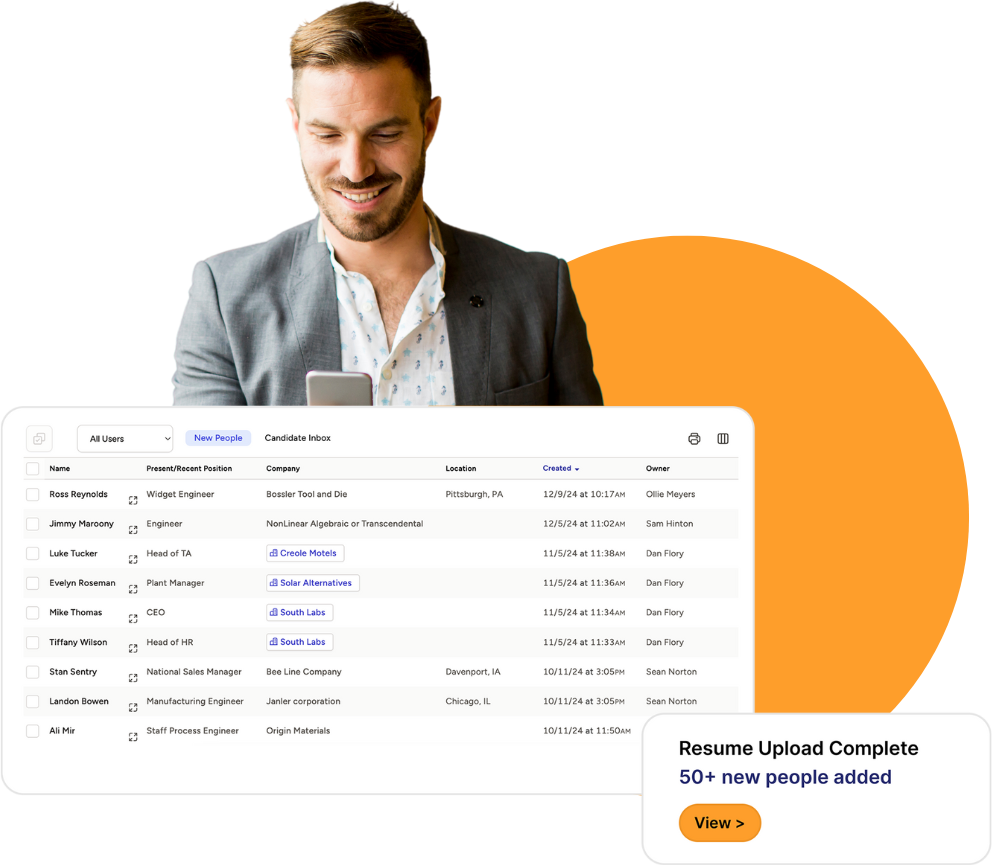
One of the central components of Top Echelon Software is its candidate database. Recruiters can store, organize, and retrieve candidate profiles using search filters, tags, and categorization tools. This allows for efficient reuse of candidate data across different job openings.
The system also supports resume parsing, which extracts relevant information from uploaded resumes and converts it into structured data fields. This reduces manual entry and helps maintain consistency across records.
Job Order Management
Recruitment workflows often revolve around job orders from clients. The platform provides tools to create, track, and update job listings, including details such as requirements, deadlines, and assigned recruiters.
Users can link candidates directly to job orders, creating a clear pipeline view that tracks progress from initial sourcing to final placement.
CRM Functionality
Top Echelon Software includes CRM features that enable recruiters to manage client relationships alongside candidate data. This includes storing client contact details, tracking communication history, and managing business development activities.
Such integration reduces the need for separate systems and supports a more cohesive recruitment strategy.
Workflow Automation
Automation features are designed to streamline repetitive tasks. These may include email templates, status updates, and reminders for follow-ups. By automating routine actions, recruiters can focus more on evaluation and relationship-building rather than administrative work.
Reporting and Analytics
The platform offers reporting tools that provide insights into recruitment performance. Metrics such as placement rates, time-to-fill, and recruiter activity levels can be tracked and analyzed.
These insights can help organizations identify inefficiencies and adjust their hiring strategies accordingly.
Integration Capabilities
Top Echelon Software supports integration with other tools commonly used in recruitment, such as email platforms and job boards. This allows data to flow between systems, reducing duplication and improving operational efficiency.
Common Use Cases
Staffing Agencies Managing Multiple Clients
Recruitment agencies often handle several clients simultaneously, each with unique hiring requirements. Top Echelon Software helps manage these parallel workflows by organizing job orders and candidate pipelines in a centralized system.
Executive Search Firms
For firms focusing on specialized or senior-level roles, maintaining detailed candidate profiles and long-term relationships is essential. The platform’s CRM capabilities support this need by enabling continuous engagement with potential candidates.
Small to Mid-Sized Recruiting Teams
Teams that do not have the resources for large-scale enterprise systems may use Top Echelon Software as a structured yet accessible solution for managing recruitment operations.
Remote Recruiting Operations
Cloud-based access allows recruiters working in different locations to collaborate on shared data. This is particularly relevant in distributed work environments where coordination relies on digital tools.
Potential Advantages
Centralized Information Management
By combining ATS and CRM functionalities, Top Echelon Software reduces the fragmentation of data across multiple systems. This centralization can improve data accuracy and accessibility.
Improved Workflow Visibility
Recruiters and managers can track the status of candidates and job orders in real time. This visibility supports better coordination and decision-making.
Time Efficiency Through Automation
Automated processes help reduce the administrative burden associated with recruitment tasks. This can lead to more efficient use of time, particularly in high-volume hiring scenarios.
Relationship-Oriented Approach
The inclusion of CRM features reflects the importance of long-term relationships in recruitment. Users can maintain ongoing connections with candidates and clients, rather than treating each placement as a standalone transaction.
Scalability for Growing Teams
As recruitment operations expand, the platform can accommodate increased data and workflow complexity without requiring a complete system overhaul.
Limitations & Considerations
Learning Curve for New Users
Like many comprehensive platforms, Top Echelon Software may require time for users to become familiar with its interface and features. Initial setup and training can be necessary to achieve effective usage.
Customization Constraints
While the platform offers a range of features, some organizations may find limitations in customization compared to highly configurable enterprise solutions.
Dependence on Data Quality
The effectiveness of the system depends heavily on the accuracy and completeness of stored data. Inconsistent data entry practices can reduce the value of reporting and search functionalities.
Integration Limitations
Although integrations are supported, compatibility with all external tools is not guaranteed. Organizations may need to evaluate whether their existing systems can be seamlessly connected.
Cost Considerations for Smaller Firms
For very small teams or independent recruiters, the cost of adopting a dedicated recruitment platform may need to be weighed against the scale of their operations.
Who Should Consider Top Echelon Software
Top Echelon Software is generally suited for:
-
Recruitment agencies handling multiple clients and job orders
-
Teams seeking a combined ATS and CRM solution
-
Organizations that prioritize structured workflows and data management
-
Recruiters who rely on long-term candidate relationships
-
Firms transitioning from manual or spreadsheet-based systems
Its feature set aligns with environments where coordination, tracking, and relationship management are central to daily operations.
Who May Want to Avoid It
Certain users may find the platform less aligned with their needs:
-
Individual recruiters with minimal workflow complexity
-
Organizations requiring highly customized enterprise-level systems
-
Teams already using deeply integrated HR ecosystems
-
Users seeking extremely lightweight or minimalistic tools
In such cases, simpler or more specialized solutions may be more appropriate.
Comparison With Similar Tools
Top Echelon Software vs Applicant Tracking Systems
Traditional ATS platforms focus primarily on managing job applications and tracking candidate progress. While Top Echelon Software includes these capabilities, it extends beyond them by incorporating CRM functionality.
This broader scope makes it more suitable for agencies that need to manage both candidates and client relationships.
Top Echelon Software vs CRM-Only Platforms
CRM tools designed for sales or general relationship management may not include recruitment-specific features such as resume parsing or job order tracking. Top Echelon Software addresses this gap by tailoring CRM functionality to the recruitment context.
Top Echelon Software vs Enterprise Recruiting Solutions
Large enterprise systems often offer extensive customization and integration options but may require significant resources to implement and maintain. Top Echelon Software provides a more streamlined alternative, though with fewer customization capabilities.
Top Echelon Software vs Lightweight Hiring Tools
Simpler tools may offer ease of use and lower costs but often lack the depth needed for managing complex recruitment workflows. Top Echelon Software occupies a middle ground, balancing functionality with accessibility.
Final Educational Summary
Recruitment management platforms have become essential in addressing the growing complexity of modern hiring processes. By centralizing data, automating workflows, and supporting relationship management, these tools aim to improve efficiency and consistency.
Top Echelon Software represents a hybrid approach that combines applicant tracking with CRM capabilities. Its design reflects the needs of recruitment agencies and teams that manage multiple stakeholders and long-term candidate pipelines.
While the platform offers advantages in organization and workflow visibility, its effectiveness depends on proper implementation, data quality, and alignment with organizational needs. It may not suit every use case, particularly those requiring extensive customization or minimal functionality.
Understanding the role of such tools within the broader recruitment ecosystem can help organizations make informed decisions about their hiring infrastructure.
Disclosure: This article is for educational and informational purposes only. Some links on this website may be affiliate links, but this does not influence our editorial content or evaluations.
