
Introduction
As digital communication channels expand, identifying accurate professional contact information has become increasingly complex. Organizations across industries often rely on data-driven outreach, whether for recruitment, partnerships, research, or business development. However, locating verified email addresses, phone numbers, and organizational details is not always straightforward. Publicly available data is fragmented, frequently outdated, and sometimes unreliable.
This challenge has contributed to the emergence of contact intelligence platforms—tools designed to aggregate, verify, and organize professional data at scale. These platforms aim to bridge the gap between publicly scattered information and structured, usable datasets. Within this category, RocketReach has established itself as a recognizable name, offering a database of professional profiles and contact details intended for business and research purposes.
Understanding how such tools function, where they are useful, and their limitations is essential for anyone considering their role in workflows involving outreach or data analysis.
What Is RocketReach?
RocketReach is a contact intelligence and data enrichment platform that provides access to a large database of professional profiles. It is primarily used to find email addresses, phone numbers, and social media profiles associated with individuals across various industries.
The platform aggregates data from multiple publicly available sources, including company websites, professional networks, and other online directories. It then applies algorithms and verification processes to match individuals with their corresponding contact information.
From a classification perspective, RocketReach falls into the category of:
-
B2B contact database tools
-
Sales intelligence platforms
-
Recruitment sourcing tools
-
Data enrichment services
Its functionality overlaps with tools commonly used in lead generation, talent acquisition, and market research, although its application extends beyond purely commercial use cases.
Key Features Explained
Extensive Contact Database
RocketReach maintains a large repository of professional profiles, covering individuals from startups, mid-sized organizations, and multinational corporations. This database includes:
-
Email addresses (work and sometimes personal)
-
Phone numbers (where available)
-
Job titles and company affiliations
-
Social media profiles
The scale of this database is one of the defining characteristics of the platform.
Email Lookup and Verification
One of the central features is the ability to search for verified email addresses. The system attempts to validate emails through pattern recognition, domain matching, and historical usage data. While not always guaranteed to be accurate, the verification process is designed to reduce bounce rates compared to manual searches.
Bulk Search Capabilities
RocketReach allows users to upload lists or perform batch searches. This is particularly useful for organizations handling large datasets, such as recruitment agencies or research teams compiling industry reports.
Bulk functionality typically includes:
-
Uploading CSV files
-
Matching multiple profiles simultaneously
-
Exporting enriched data
Integration With External Platforms
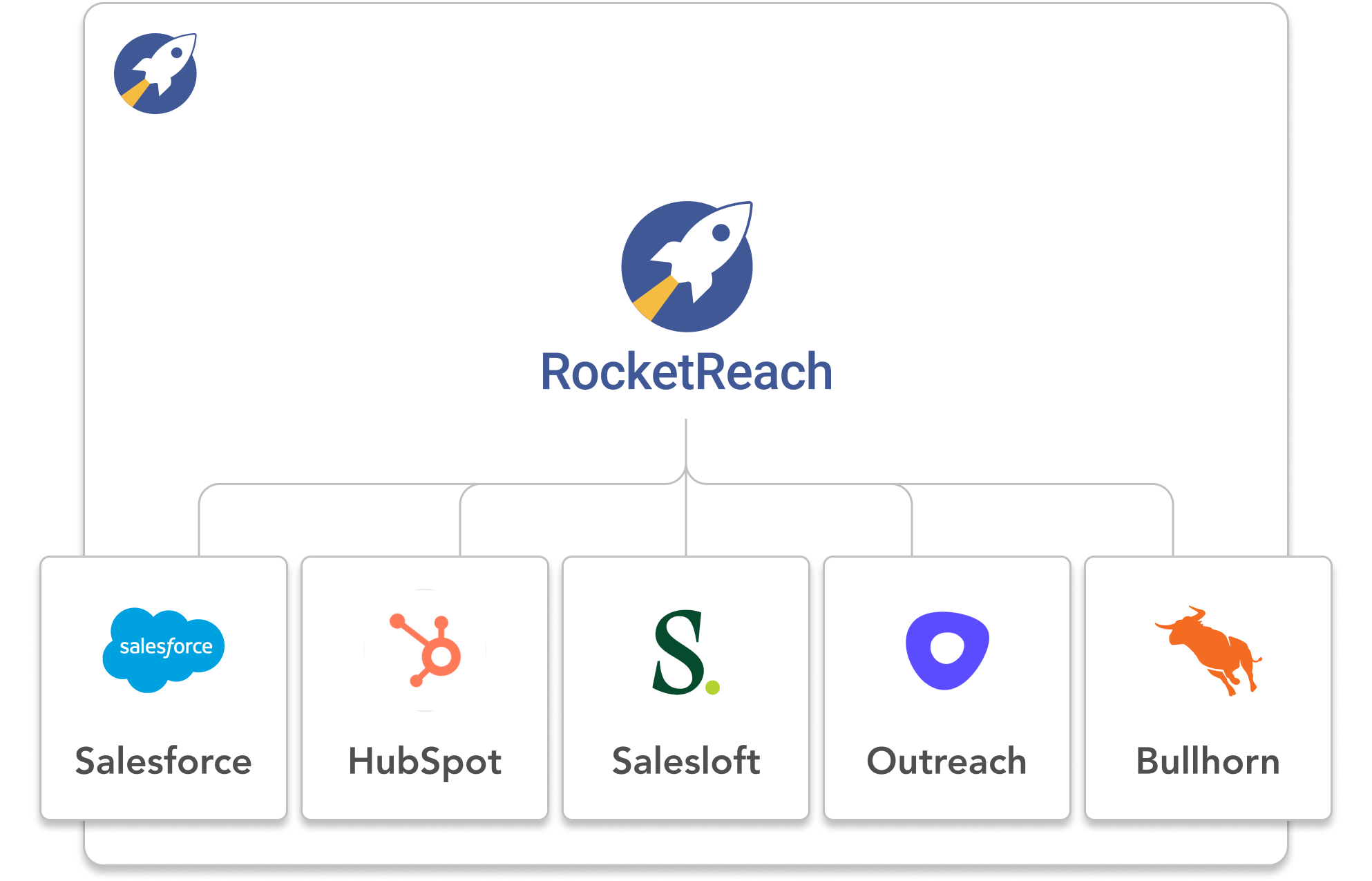
The tool integrates with several commonly used platforms, including CRM systems and browser extensions. These integrations allow users to access contact data without switching between multiple tools.
For example, users may retrieve contact information directly while browsing professional profiles online, reducing workflow friction.
Company Search and Filtering
RocketReach includes filters that allow users to narrow down searches based on:
-
Industry
-
Company size
-
Location
-
Job role or seniority
This structured filtering enables more targeted data retrieval compared to general search engines.
API Access for Data Enrichment
For technical users, RocketReach provides API access, enabling automated data enrichment within internal systems. This is often used by organizations that maintain proprietary databases and want to enhance them with external contact information.
Common Use Cases
Recruitment and Talent Sourcing
Recruiters frequently use contact intelligence tools to identify and reach potential candidates. RocketReach can assist in locating professionals who may not be actively applying for roles but are visible through their online presence.
Sales Prospecting
Sales teams often rely on accurate contact data to initiate communication with decision-makers. RocketReach supports this by providing access to professional email addresses and organizational details.
Market Research
Researchers and analysts use such platforms to identify industry experts, compile datasets, or understand organizational structures within specific sectors.
Business Development
Partnership teams may use RocketReach to identify key stakeholders within companies, particularly when exploring collaborations or outreach initiatives.
Journalism and Media Outreach
Journalists sometimes use contact databases to reach sources, subject-matter experts, or corporate representatives for commentary or verification.
Potential Advantages
Time Efficiency
Manually searching for contact information across multiple sources can be time-consuming. RocketReach consolidates this process into a single interface, reducing the effort required to locate relevant data.
Centralized Data Access
Having a structured database simplifies the process of organizing and retrieving contact information. This is especially beneficial for teams working collaboratively.
Broad Coverage Across Industries
The platform’s database spans multiple sectors, making it applicable to diverse use cases—from technology and finance to healthcare and education.
Workflow Integration
Compatibility with CRM systems and browser extensions allows users to incorporate RocketReach into existing workflows rather than treating it as a standalone tool.
Data Enrichment Capabilities
For organizations managing large datasets, the ability to enrich existing records with additional contact details can improve data completeness.
Limitations & Considerations
Data Accuracy Variability
While RocketReach uses verification mechanisms, no contact database can guarantee complete accuracy. Email addresses may become outdated, and job roles can change frequently.
Privacy and Compliance Concerns
Using contact intelligence tools requires careful consideration of data privacy regulations such as GDPR and other regional laws. Organizations must ensure that their use of such data aligns with legal and ethical standards.
Limited Contextual Information
Although RocketReach provides contact details, it may not always include deeper contextual insights about individuals, such as recent activities, preferences, or engagement history.
Subscription-Based Access
Access to the full range of features typically requires a paid subscription. Free versions, where available, often come with limitations on search volume or data access.
Dependence on Public Data Sources
Since the platform aggregates publicly available information, its effectiveness depends on the availability and accuracy of those sources.
Who Should Consider RocketReach
Recruitment Professionals
Those involved in talent acquisition may find RocketReach useful for identifying and contacting candidates across different industries.
Sales and Business Development Teams
Teams focused on outreach and relationship building can benefit from structured access to contact information.
Researchers and Analysts
Individuals conducting industry research or compiling datasets may use the platform to streamline data collection.
Startups and Small Teams
Organizations without large internal databases may rely on external tools like RocketReach to access professional contact data.
Who May Want to Avoid It
Individuals With Minimal Outreach Needs
For users who only occasionally need contact information, the platform’s capabilities may exceed their requirements.
Privacy-Sensitive Organizations
Companies operating under strict data governance policies may need to carefully evaluate whether using such tools aligns with their compliance frameworks.
Budget-Constrained Users
Since advanced features are typically part of paid plans, users with limited budgets might consider alternative methods or lower-cost tools.
Comparison With Similar Tools
RocketReach operates within a competitive landscape that includes several other contact intelligence platforms. While many tools offer overlapping functionality, there are differences in focus, data sources, and usability.
Database Size vs. Data Depth
Some platforms prioritize larger datasets, while others focus on deeper insights into fewer profiles. RocketReach leans toward broad coverage, which may be advantageous for general searches but less detailed in specific cases.
Verification Methods
Different tools use varying approaches to verify email addresses and contact details. Accuracy levels can differ depending on the methodology and frequency of updates.
Integration Ecosystem
Certain competitors emphasize seamless integration with CRM systems and marketing platforms. RocketReach offers integrations, but the depth and compatibility may vary compared to other tools.
User Interface and Workflow
Ease of use can differ significantly. Some tools are designed for highly technical users, while others prioritize accessibility for non-technical audiences.
Pricing Models
Pricing structures vary widely across the industry, with some platforms offering tiered plans based on usage, while others provide pay-as-you-go models.
Final Educational Summary
RocketReach represents a category of tools designed to address the growing need for structured, accessible professional contact data. By aggregating information from multiple public sources and presenting it in a searchable format, it simplifies tasks that would otherwise require extensive manual effort.
Its applications span recruitment, sales, research, and business development, reflecting the broad demand for reliable contact intelligence. At the same time, its limitations—particularly regarding data accuracy and privacy considerations—highlight the importance of using such tools responsibly and critically.
Rather than serving as a standalone solution, RocketReach is often most effective when integrated into a broader workflow that includes verification, compliance checks, and contextual research. Understanding its capabilities and constraints allows users to make informed decisions about whether it aligns with their specific needs.
