
Introduction
As professional networking increasingly shifts toward digital environments, platforms such as LinkedIn have become central to outreach, recruitment, and lead generation. However, maintaining consistent engagement at scale presents a practical challenge. Individuals and organizations often struggle to balance personalization with efficiency when managing large volumes of connections, follow-ups, and messaging workflows.
This gap has led to the emergence of a category of tools commonly described as LinkedIn automation or outreach management software. These platforms aim to streamline repetitive tasks such as sending connection requests, scheduling follow-ups, and organizing prospect data. Within this landscape, Waalaxy has gained visibility as one such solution designed to assist with structured outreach processes.
Understanding how tools like Waalaxy function requires examining both their capabilities and the broader implications of automation in professional networking.
What Is Waalaxy?
Waalaxy is a browser-based automation tool primarily built to integrate with LinkedIn workflows. It is typically categorized under sales automation, lead generation software, and LinkedIn prospecting tools. The platform is designed to help users manage outreach campaigns by automating repetitive actions such as connection requests, messaging sequences, and follow-ups.
Unlike general CRM systems, Waalaxy operates closer to the interaction layer of LinkedIn itself. It functions as an intermediary that organizes contacts, tracks communication sequences, and executes predefined outreach actions. Some versions also integrate with email systems, enabling multi-channel communication strategies.
From a technical perspective, Waalaxy relies on workflow automation logic—users define sequences of actions that the tool executes over time. These sequences can include delays, conditional steps, and personalization fields.
Key Features Explained
Automated Outreach Sequences
One of the central features of Waalaxy is the ability to create automated outreach sequences. These workflows allow users to define a series of steps, such as sending a connection request followed by a message after a delay. The sequencing feature is designed to reduce manual repetition while maintaining a structured communication flow.
Contact Management System
Waalaxy includes a built-in database that organizes leads and contacts. Users can categorize individuals based on campaign participation, response status, or other criteria. This structured approach helps track interactions without requiring a separate CRM system.
Multi-Channel Communication
Some configurations of Waalaxy extend beyond LinkedIn messaging to include email outreach. This allows users to create hybrid campaigns where contacts may receive messages through different channels depending on availability and response behavior.
Campaign Templates
The platform provides pre-defined campaign structures that users can adapt. These templates typically include standard outreach patterns, such as initial contact, follow-up reminders, and re-engagement attempts. Templates can simplify the setup process, especially for users unfamiliar with automation workflows.
Data Import and Export
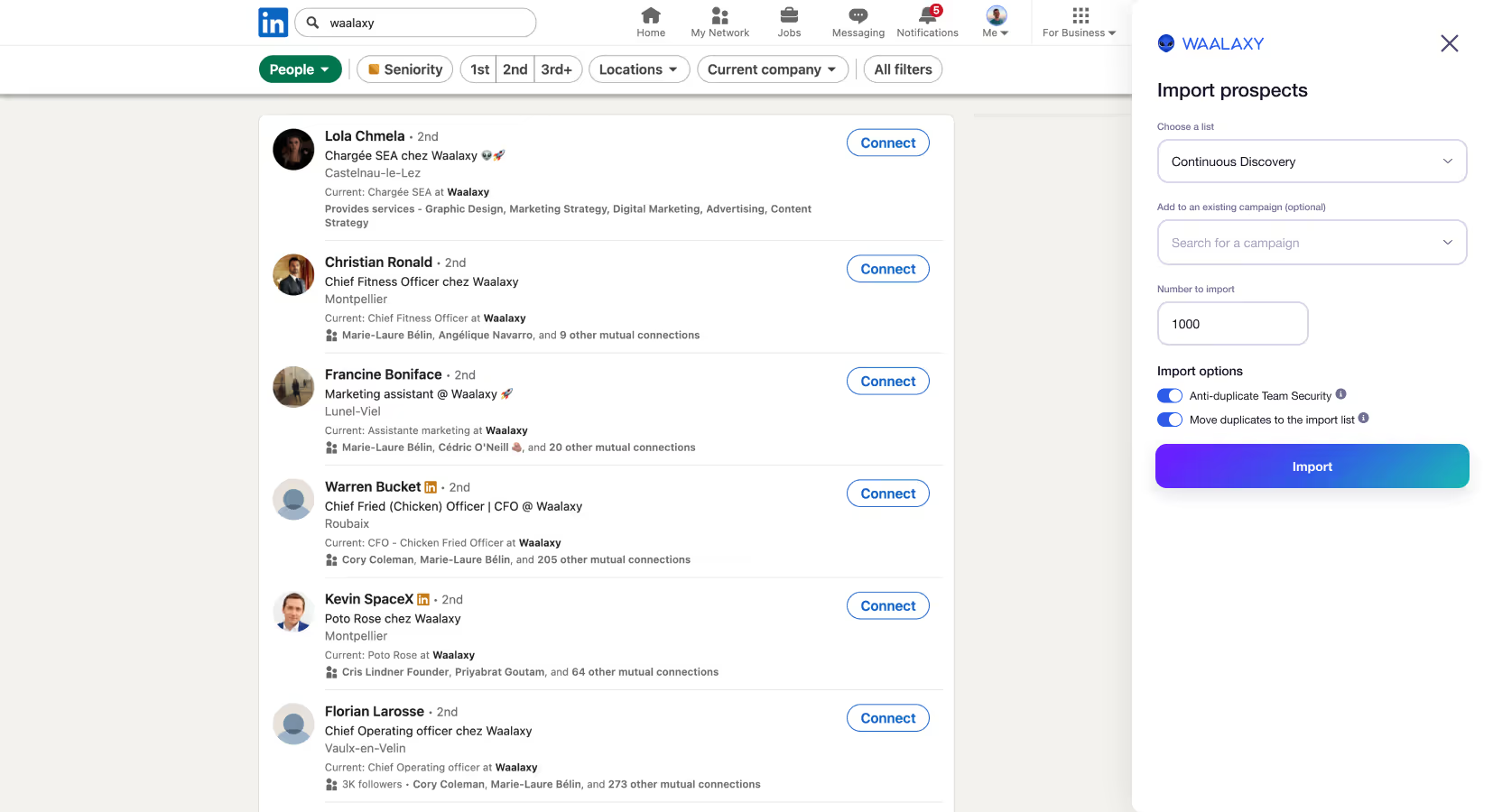
Waalaxy supports importing contact data from LinkedIn searches or external files. Export features enable users to download campaign data for reporting or integration with other systems. This functionality contributes to flexibility in managing outreach data.
Personalization Variables
To address the need for tailored communication, Waalaxy allows the use of variables such as first name, company name, or job title within messages. This feature attempts to preserve a level of personalization despite automation.
Common Use Cases
Lead Generation for Sales Professionals
Sales teams often use Waalaxy to identify and engage potential clients. By automating initial outreach, they can focus more on qualified leads who respond positively.
Recruitment Outreach
Recruiters may use the tool to contact multiple candidates efficiently. Automated follow-ups can help maintain communication without manually tracking each interaction.
Networking and Personal Branding
Individuals seeking to expand their professional network sometimes use Waalaxy to send connection requests and introductory messages at scale.
Event Promotion and Invitations
Organizations may utilize automated messaging to invite contacts to webinars, conferences, or online events. The sequencing feature helps ensure consistent follow-up communication.
Market Research and Surveys
Automated outreach can also be used to gather responses for surveys or feedback collection, particularly when targeting a specific professional demographic.
Potential Advantages
Time Efficiency
Automation reduces the need for repetitive manual actions. Tasks such as sending connection requests or follow-up messages can be executed without continuous user input.
Scalability
Waalaxy enables users to handle a larger volume of outreach than would typically be feasible manually. This is particularly relevant for sales and recruitment functions.
Structured Workflows
The ability to define sequences introduces consistency in communication. Users can standardize outreach processes across campaigns.
Data Organization
Built-in contact management features provide a centralized view of interactions, making it easier to track engagement history and campaign performance.
Multi-Channel Flexibility
The inclusion of email alongside LinkedIn messaging allows for diversified communication strategies, which may improve response opportunities in some contexts.
Limitations & Considerations
Platform Dependency
Waalaxy relies heavily on LinkedIn’s interface and policies. Changes to LinkedIn’s platform or restrictions on automation can impact functionality.
Compliance and Terms of Service
Automating actions on LinkedIn may raise concerns regarding compliance with the platform’s terms of service. Users must consider the potential risks associated with automation tools.
Risk of Reduced Personalization
While personalization variables exist, automated messages may still lack the nuance of manually crafted communication. This can affect engagement quality.
Learning Curve
Setting up effective campaigns requires an understanding of workflow logic and segmentation. New users may need time to configure sequences appropriately.
Data Accuracy
Imported data from LinkedIn searches may not always be complete or up to date. This can influence the effectiveness of outreach campaigns.
Over-Automation Risks
Excessive reliance on automation can lead to generic communication patterns, which may reduce credibility in professional networking contexts.
Who Should Consider Waalaxy
Sales Teams Managing High Outreach Volumes
Professionals responsible for prospecting and lead generation may find value in structured automation, particularly when dealing with large datasets.
Recruitment Agencies
Organizations that frequently contact multiple candidates could benefit from streamlined messaging workflows.
Marketing Professionals Focused on B2B Engagement
Those working in business-to-business environments may use Waalaxy to initiate conversations and nurture leads over time.
Consultants and Freelancers
Independent professionals seeking to expand their network or client base may use automation to maintain consistent outreach efforts.
Who May Want to Avoid It
Professionals Prioritizing Deep Personalization
Individuals who rely on highly tailored communication may find automation limiting in terms of message quality.
Users Concerned About Platform Policies
Those who prefer strict adherence to LinkedIn’s terms without ambiguity may hesitate to use automation tools.
Small-Scale Networkers
Users managing a limited number of connections may not require the complexity of automation software.
Organizations Without Defined Outreach Strategies
Without a clear communication framework, automation tools may not deliver meaningful results and could create disorganized workflows.
Comparison With Similar Tools
Waalaxy operates within a broader ecosystem of LinkedIn automation and sales engagement platforms. Comparing it with similar tools helps contextualize its functionality.
Waalaxy vs. Expandi
Expandi is another LinkedIn automation platform known for cloud-based operation. While Waalaxy often runs as a browser extension, Expandi emphasizes remote execution, which may reduce dependency on local devices.
Waalaxy vs. Phantombuster
Phantombuster provides a wider range of automation capabilities beyond LinkedIn, including data scraping and API integrations. Waalaxy, by contrast, focuses more specifically on outreach workflows.
Waalaxy vs. LinkedIn Sales Navigator
LinkedIn Sales Navigator is an official LinkedIn product designed for advanced search and lead tracking. Unlike Waalaxy, it does not automate messaging but offers deeper insights and filtering options within LinkedIn’s ecosystem.
Waalaxy vs. Lemlist
Lemlist is primarily an email outreach platform with personalization features. While it can complement LinkedIn strategies, it does not directly automate LinkedIn interactions in the same way Waalaxy does.
Each of these tools reflects different priorities—some emphasize compliance and analytics, while others focus on automation and scalability. Waalaxy’s position lies in balancing structured outreach with relatively accessible setup processes.
Final Educational Summary
Waalaxy represents a specific approach to managing professional outreach in digital networking environments. By automating repetitive tasks and organizing communication workflows, it addresses the challenge of scaling engagement on platforms like LinkedIn.
However, its use involves trade-offs. While efficiency and scalability improve, considerations around personalization, compliance, and platform dependency remain significant. As with many automation tools, effectiveness depends not only on the software itself but also on how it is configured and integrated into broader communication strategies.
Understanding Waalaxy within the context of LinkedIn automation tools highlights the broader shift toward workflow-driven engagement in professional networking. It illustrates how technology continues to reshape how individuals and organizations initiate and maintain connections in increasingly digital ecosystems.
Disclosure: This article is for educational and informational purposes only. Some links on this website may be affiliate links, but this does not influence our editorial content or evaluations.
