Introduction
Digital communication increasingly depends on visual documents such as presentations, slide decks, reports, and interactive summaries. In many professional and academic environments, information must be translated into formats that combine structured text with visual elements. Traditional presentation software often requires manual layout adjustments, formatting decisions, and repeated design work before content can be effectively communicated.
This challenge has led to the emergence of a new category of tools focused on AI-assisted document creation and presentation design. These platforms attempt to simplify the process by automatically generating layouts, formatting content, and suggesting visual structures based on user input. Instead of building each slide manually, users provide text prompts or outlines that are converted into structured visual documents.
One example of this emerging category is Gamma, a web-based platform designed to generate presentations, documents, and visual content using artificial intelligence and structured design systems. The tool reflects a broader shift toward automated layout systems and collaborative digital publishing environments.
Understanding how such tools function—and where they fit within existing productivity workflows—can help individuals evaluate whether AI-assisted document platforms are appropriate for their needs.
What Is Gamma App?
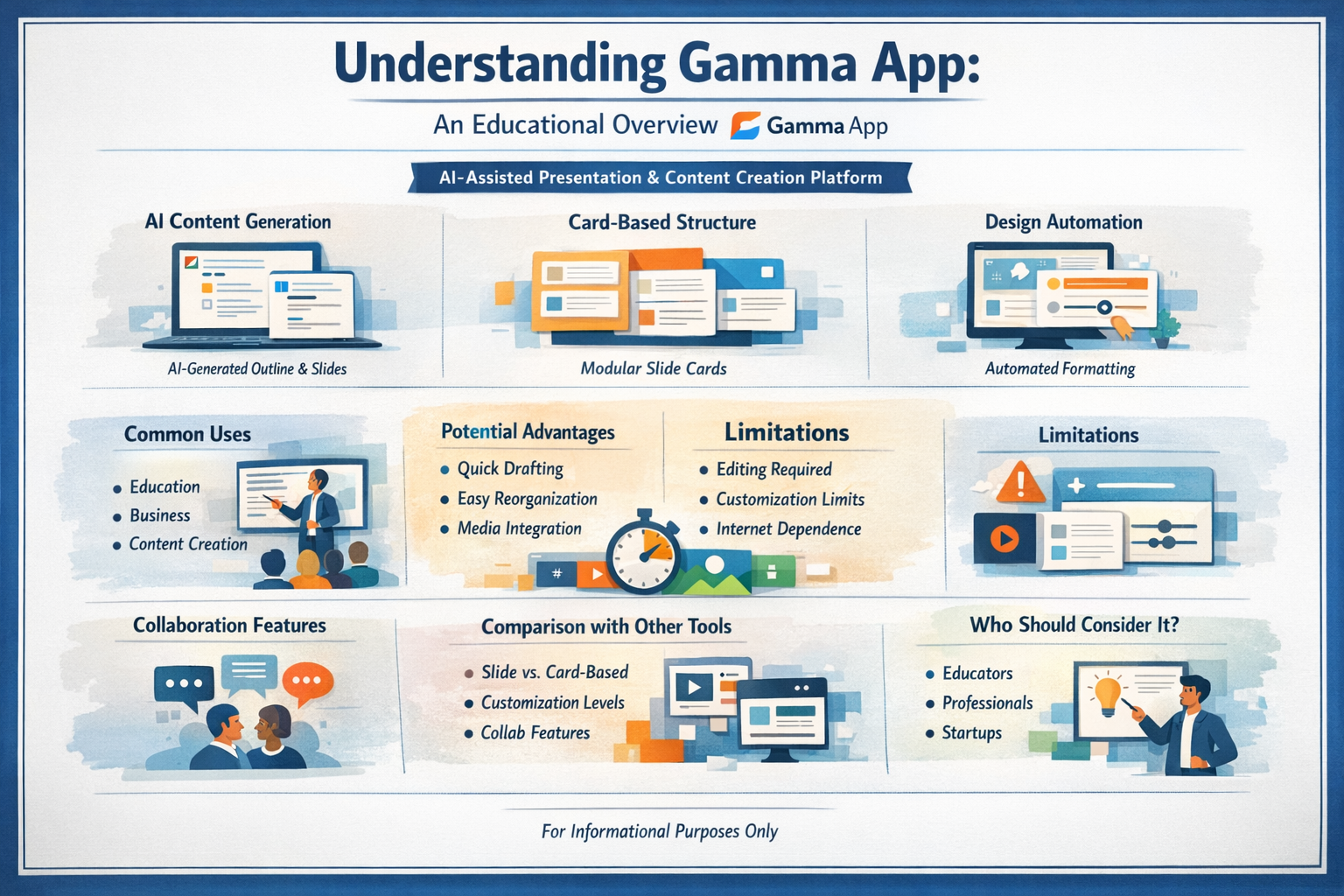
Gamma App is a cloud-based AI presentation and document creation platform that generates structured visual content from written prompts, outlines, or imported text. It belongs to a category of software sometimes described as AI presentation generators, AI document design tools, or automated slide creation platforms.
Unlike traditional slide software where each slide is manually arranged, Gamma App focuses on card-based content layouts. Instead of conventional slides, content is organized into structured sections that adapt automatically to screen sizes and presentation contexts.
The platform typically includes features that support:
-
AI-generated presentation drafts
-
Automatic formatting and layout systems
-
Embedded multimedia content
-
Collaborative editing
-
Web-based publishing
The design philosophy behind Gamma App emphasizes reducing the time spent on layout design and formatting decisions. Instead, the system attempts to convert structured text or prompts into visually organized information blocks.
In practical terms, this places Gamma App somewhere between several existing tool categories:
-
Traditional presentation software
-
Online document editors
-
AI writing assistants
-
Visual storytelling platforms
By combining aspects of these systems, the platform attempts to streamline the process of turning ideas into visually structured digital documents.
Key Features Explained
AI-Generated Content Structures
One of the primary characteristics of Gamma App is its AI-assisted document generation. Users can provide prompts, outlines, or text summaries that the system converts into structured presentation cards or sections.
The system typically performs tasks such as:
-
Breaking text into topic segments
-
Creating headings and subheadings
-
Suggesting layout arrangements
-
Organizing ideas into logical flows
This process reduces the need for manual slide structuring.
Card-Based Layout System
Instead of traditional slides, Gamma App uses cards, which function as flexible content containers. Cards may include combinations of:
-
Text blocks
-
Images
-
Data visualizations
-
Lists
-
Embedded media
Cards can adapt to different screen sizes, allowing the same content to be viewed as a presentation or as a scrolling document.
Built-In Design Framework
A recurring challenge in presentation design is visual consistency. Gamma App addresses this through a built-in design framework that applies consistent formatting across documents.
This may include:
-
Preset typography systems
-
Color palette controls
-
Layout spacing rules
-
Template styles
The intention is to maintain visual coherence without requiring manual design adjustments.
Multimedia Integration
Modern presentations often include multiple content formats. Gamma App supports embedding media directly into cards, including:
-
Images
-
Videos
-
charts
-
interactive elements
-
external content embeds
This allows a single document to function as a multimedia presentation environment.
Real-Time Collaboration
Many AI productivity tools now include collaborative editing systems. Gamma App allows multiple users to contribute to a document simultaneously, similar to collaborative document platforms.
Collaboration features generally include:
-
Shared editing
-
comment systems
-
version tracking
-
content suggestions
This can support team-based content development.
Presentation and Publishing Modes
Content created in Gamma App can often be displayed in multiple formats:
-
live presentation mode
-
scrolling document format
-
shareable web page
-
exportable file formats
This flexibility allows one document to serve multiple purposes.
Common Use Cases
Educational Presentations
Teachers, trainers, and students often need to convert complex information into structured slides or visual summaries. AI-generated layouts may assist in organizing lecture notes or research topics into presentation formats.
Business Reporting
Organizations frequently produce internal presentations covering topics such as:
-
quarterly performance
-
project updates
-
product briefings
-
strategic planning summaries
Automated document design tools can help structure these reports more quickly.
Content Outlining
Writers and researchers sometimes use visual document tools to outline ideas. The card-based format used by Gamma App may support structured brainstorming and topic mapping.
Startup and Product Pitch Decks
Early-stage companies often create pitch presentations for investors, partners, or internal teams. AI presentation generators can help create initial pitch deck drafts based on outlines or prompts.
Marketing and Communication Briefs
Marketing teams often create internal strategy documents or campaign presentations. Platforms that automatically structure visual documents can assist in turning written briefs into presentation-ready materials.
Knowledge Documentation
Organizations maintaining internal knowledge bases may use presentation-style documents for documentation, onboarding materials, or internal guides.
Potential Advantages
Reduced Design Overhead
Traditional slide creation requires manual layout work, including:
-
arranging text boxes
-
adjusting visual hierarchy
-
aligning elements
-
selecting design styles
Automated layout systems reduce the amount of manual formatting required.
Faster Content Structuring
AI presentation generators can convert outlines or text prompts into structured presentations more quickly than manual slide creation.
This may help during early drafting phases when the goal is to organize ideas rather than finalize visual details.
Consistent Visual Formatting
Built-in design frameworks can help maintain consistent typography, spacing, and layout rules across documents.
This can be particularly useful for teams that want consistent visual standards without relying on dedicated design staff.
Flexible Viewing Formats
Because Gamma App uses card-based layouts rather than rigid slides, content may adapt to different viewing environments.
A document may function both as:
-
a presentation
-
a shareable online document
-
a scrolling narrative format
Integration of AI Writing Assistance
Some AI presentation platforms combine layout automation with content suggestions or text refinement features. This can support early drafting workflows.
Limitations & Considerations
Dependence on AI Interpretation
AI-generated structures depend heavily on the clarity of the prompt or source text. If the initial input lacks structure, the generated presentation may require significant editing.
Limited Custom Design Control
Automated layout systems often prioritize simplicity and consistency. As a result, users seeking advanced visual customization may encounter limitations compared with traditional design tools.
Editing Complexity in Generated Content
Automatically generated slides or cards may include content that requires manual refinement. Users may need to review generated text carefully for accuracy and clarity.
Internet Dependency
Because Gamma App operates primarily as a cloud-based platform, reliable internet access is typically required for editing and collaboration.
Offline workflows may be limited compared with desktop presentation software.
Data and Privacy Considerations
As with many AI-driven productivity tools, users should consider how uploaded content is processed and stored. Organizations handling sensitive information may evaluate data policies carefully before adopting such platforms.
Who Should Consider Gamma App
Gamma App may be relevant for individuals or teams who frequently create visual documents, presentations, or structured reports but prefer not to design slides manually.
Potential users include:
-
educators preparing lecture materials
-
startup founders creating pitch decks
-
marketing teams developing strategy presentations
-
consultants producing visual reports
-
content creators summarizing research topics
-
students organizing academic presentations
The tool may also appeal to teams experimenting with AI productivity tools as part of their digital workflow.
Who May Want to Avoid It
Certain users may find Gamma App less suitable depending on their requirements.
Professional Designers
Graphic designers or presentation specialists who require detailed control over layout elements, animations, and visual design systems may prefer advanced design software.
Highly Customized Presentation Needs
Organizations producing presentations with strict brand guidelines and custom visual elements may find automated layout systems too restrictive.
Offline-First Workflows
Users who frequently work without internet access may prefer locally installed presentation software.
Technical Documentation Specialists
In some technical environments, documentation requires precise formatting, structured tables, or specialized publishing workflows that may not align with AI presentation platforms.
Comparison With Similar Tools
Gamma App operates within a growing ecosystem of AI presentation and document design platforms. These tools vary in their emphasis on automation, design flexibility, and collaboration features.
Traditional Presentation Software
Programs such as conventional slide editors provide detailed control over:
-
slide design
-
animation
-
layout positioning
-
multimedia integration
However, they typically require manual design work for each slide.
AI Presentation Generators
A newer category of tools focuses on automatically converting text prompts into slides or visual documents. These platforms prioritize speed and structure generation rather than full manual control.
Visual Storytelling Platforms
Some online tools combine presentation features with web publishing systems. These platforms often emphasize interactive storytelling rather than traditional slides.
Gamma App fits between these categories by combining:
-
AI-generated layouts
-
web-based publishing
-
collaborative editing
-
flexible card-based design
Its core distinction lies in the use of adaptive cards rather than fixed slides, which can make documents behave more like interactive web pages than static presentations.
Final Educational Summary
AI-assisted presentation tools represent a shift in how digital documents are created. Instead of manually constructing each slide or page, users increasingly rely on systems that organize information automatically using predefined design frameworks and machine-learning models.
Gamma App is one example of this evolving category. The platform focuses on converting written prompts or outlines into structured visual documents using card-based layouts and automated formatting systems. Its design approach reflects a broader trend toward AI-assisted content structuring and presentation generation.
For many users, the appeal of such tools lies in their ability to reduce time spent on formatting and visual arrangement. However, these advantages come with trade-offs related to customization, editing control, and reliance on automated systems.
As AI productivity platforms continue to evolve, tools like Gamma App illustrate how document creation workflows may increasingly blend writing, design, and automated content structuring into a single environment.
Understanding both the capabilities and limitations of these systems is essential for determining where they fit within professional, educational, and collaborative workflows.
Disclosure: This article is for educational and informational purposes only. Some links on this website may be affiliate links, but this does not influence our editorial content or evaluations.