Introduction
Starting a business involves more than just a vision; it requires navigating a complex network of legal registrations, compliance obligations, and government procedures. Entrepreneurs, freelancers, and small business owners often encounter challenges such as incomplete documentation, procedural delays, or misunderstandings about corporate structures. To address these challenges, digital tools have emerged that simplify business incorporation, registration, and compliance management.
Ownr is one such platform, designed to streamline the administrative tasks associated with creating and managing a business in Canada. This article provides an educational analysis of Ownr, examining its functionality, typical use cases, limitations, and relevance in the broader digital business landscape.
What Is Ownr?
Ownr is a Canadian digital platform that assists individuals in registering and managing businesses. It functions primarily within the legal-tech and business-administration sector, automating the preparation of corporate documentation and interactions with federal and provincial authorities. Users can leverage the platform to incorporate a corporation, register a partnership, or formalize a sole proprietorship, all through a structured digital workflow. The platform integrates legal templates, compliance tracking, and digital recordkeeping to make the incorporation process more accessible.
Key Features Explained
Ownr provides a set of features designed to facilitate business registration and administration:
-
Business Registration Automation: Simplifies the process of incorporating corporations, partnerships, or sole proprietorships, including name reservation and government filing.
-
Legal Documentation Generation: Produces required documents such as shareholder agreements, articles of incorporation, and operational by-laws.
-
Compliance Tracking: Monitors deadlines for annual filings, tax registrations, and government notifications to ensure regulatory adherence.
-
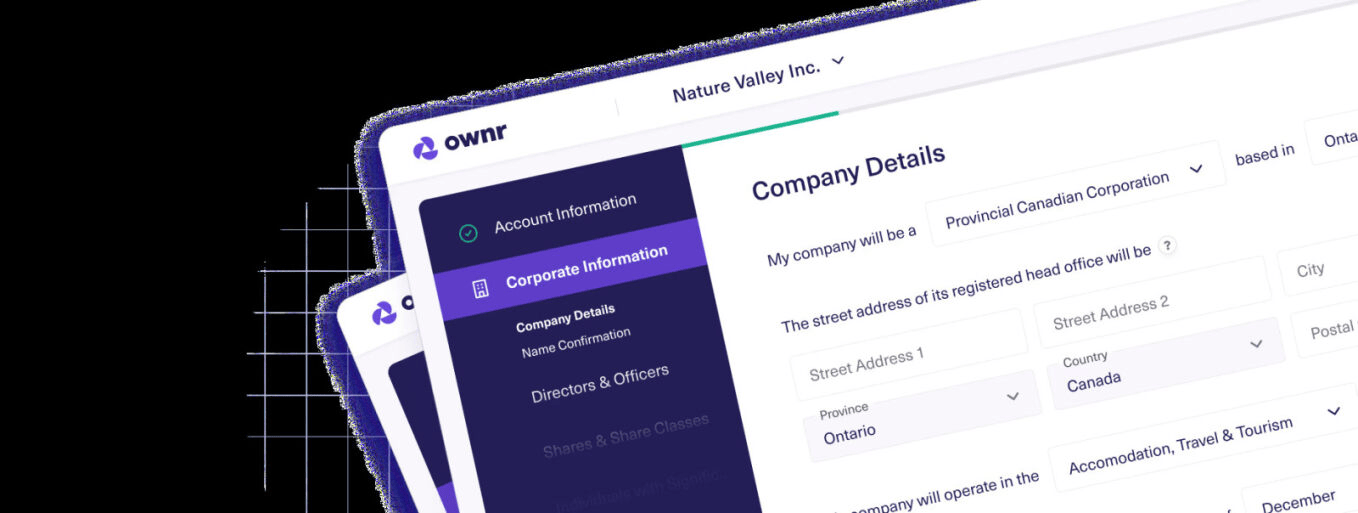
Interactive Guided Workflow: Uses step-by-step forms to assist users in making decisions about business structure, ownership, and management.
-
Centralized Document Storage: Offers a digital repository for all business filings, agreements, and compliance documents.
-
Integrated Government Submissions: Connects directly with Canadian federal and provincial authorities to file official business documents.
These features collectively aim to reduce administrative errors and make the incorporation process more efficient.
Common Use Cases
The primary scenarios for using Ownr include:
-
Startup Formation: Entrepreneurs seeking a structured path to register a new corporation or partnership.
-
Freelancers and Independent Contractors: Individuals who require formal business registration for taxation and contractual purposes.
-
Small Business Administration: Owners who need to manage compliance deadlines and maintain proper documentation efficiently.
-
Educational Research: Business students or researchers studying digital legal services and the evolution of business administration.
These use cases highlight how Ownr can support different types of users in managing the formal requirements of business operations.
Potential Advantages
There are several educationally relevant advantages to using Ownr:
-
Time Efficiency: Streamlines administrative steps, reducing the time required for registration.
-
Error Reduction: Automated forms and validation minimize the risk of mistakes in filings.
-
Regulatory Alignment: Helps users adhere to federal and provincial business regulations.
-
Document Organization: Centralized storage provides easier access to business records.
-
User Guidance: Step-by-step processes simplify complex decisions, making incorporation more understandable for novices.
These advantages demonstrate the platform’s practical utility for individuals seeking structured legal workflows without requiring expert knowledge.
Limitations & Considerations
Despite its benefits, Ownr has some limitations:
-
Geographic Scope: Primarily serves Canadian businesses, limiting applicability elsewhere.
-
Complex Legal Scenarios: May not adequately address highly customized or intricate legal structures.
-
Service Fees: Certain filings or premium features incur additional costs.
-
Platform Dependence: Digital reliance means that system downtime or errors could delay essential filings.
-
Learning Curve: Users still need some understanding of business structures and legal terminology to make informed choices.
These factors are important for objectively evaluating whether Ownr meets a user’s specific needs.
Who Should Consider Ownr
Ownr may be appropriate for:
-
Entrepreneurs starting new businesses in Canada.
-
Freelancers who need official business registration for tax or contract purposes.
-
Small business owners seeking centralized document management.
-
Students or educators studying digital legal tools and business administration technology.
Who May Want to Avoid It
The tool might be less suitable for:
-
International businesses operating outside Canada.
-
Large corporations with internal legal teams capable of handling registration in-house.
-
Users seeking a free solution without service fees.
-
Individuals requiring highly tailored legal counsel for complex corporate structures.
Recognizing these scenarios helps set realistic expectations about the platform’s suitability.
Comparison With Similar Tools
Compared to other business registration platforms, Ownr has specific characteristics:
-
Focused primarily on Canadian incorporation and compliance, unlike some global platforms.
-
Provides a centralized digital repository for legal documents, a feature not universally offered by competitors.
-
Offers guided workflows and legal templates, whereas some alternatives may require direct lawyer involvement.
-
May lack extended features like payroll management or advanced accounting found in broader business software suites.
These comparisons underline the platform’s specialized use and its limitations relative to other digital tools.
Final Educational Summary
Ownr represents a notable example of the digital transformation of business administration and legal processes. By combining automation, guided workflows, and centralized document management, it offers a structured approach for entrepreneurs and small business owners in Canada. While not a replacement for professional legal advice in complex cases, it provides an efficient means of navigating the regulatory landscape of business incorporation. From an educational perspective, Ownr illustrates how technology can reduce administrative barriers, increase compliance accuracy, and support digital entrepreneurship research.
Disclosure
Disclosure: This article is for educational and informational purposes only. Some links on this website may be affiliate links, but this does not influence our editorial content or evaluations.