
Introduction
Managing construction projects involves coordinating multiple moving parts. Contractors must oversee budgets, schedules, subcontractors, materials, compliance requirements, and client communication simultaneously. Without structured systems in place, this complexity can lead to delays, cost overruns, documentation gaps, and miscommunication between stakeholders.
Over time, the construction industry has increasingly adopted digital tools designed to centralize project information and improve operational visibility. Construction management platforms emerged to address these challenges by consolidating planning, scheduling, budgeting, and reporting within a single environment.
These platforms attempt to reduce administrative friction by organizing workflows that traditionally relied on spreadsheets, paper forms, and scattered communication channels. Within this growing category of digital construction management software, Contractor Foreman represents one example of a platform built specifically for small and mid-sized contractors seeking structured project oversight.
What Is Contractor Foreman?
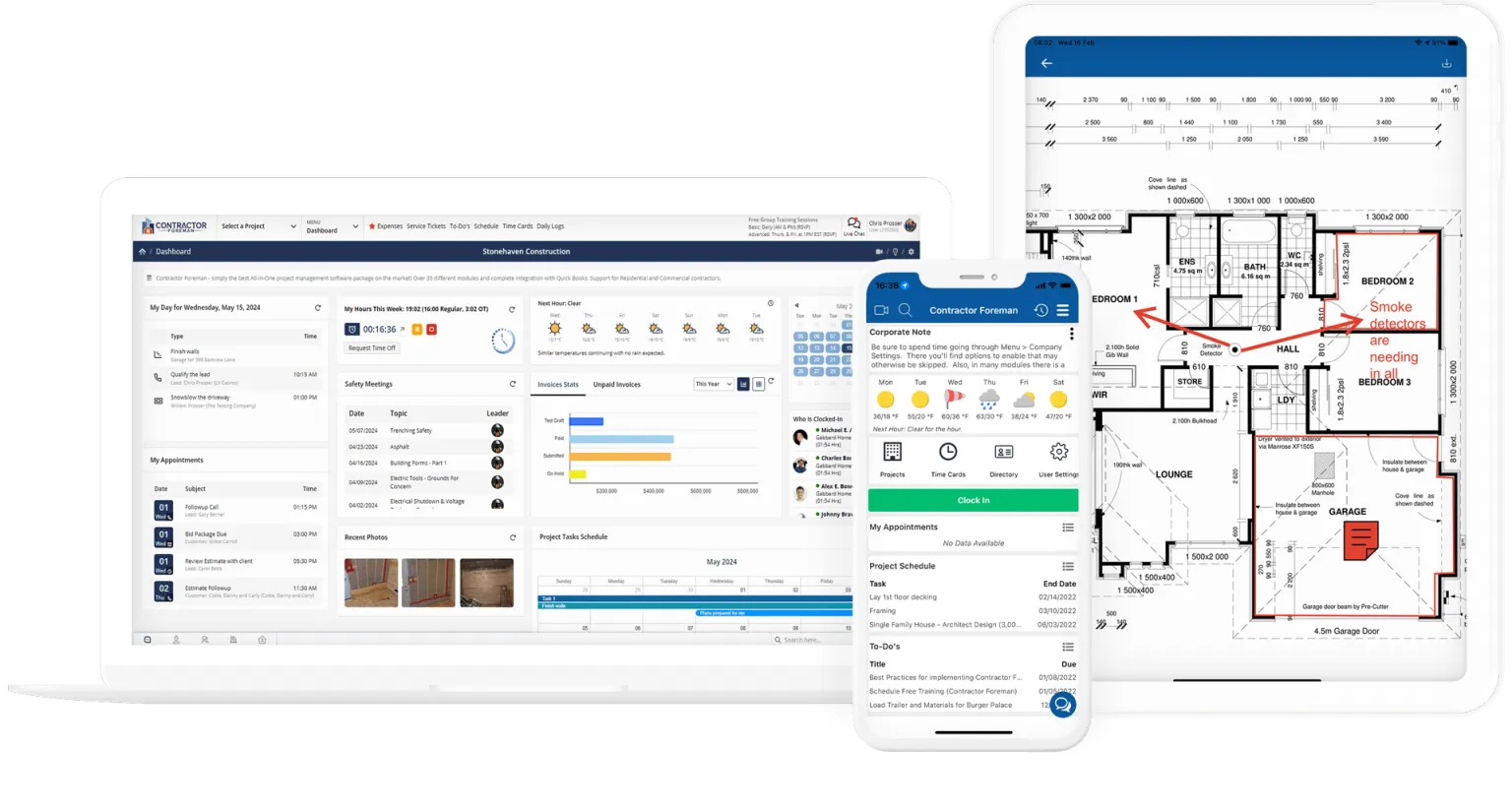
Contractor Foreman is a cloud-based construction management software platform designed to help contractors organize project operations, financial tracking, and team coordination. The system is categorized within the broader field of construction project management software, which includes tools intended to support planning, scheduling, cost estimation, documentation management, and communication across construction projects.
Unlike enterprise-focused systems built primarily for large construction firms, Contractor Foreman is generally positioned within the segment of platforms targeting independent contractors, subcontractors, and smaller construction businesses. Its structure integrates a wide range of operational modules that address day-to-day tasks encountered throughout a project’s lifecycle.
The platform operates primarily through a web-based interface and mobile accessibility, allowing project teams to access job details, update progress, track expenses, and manage documentation remotely from job sites or offices.
In practice, tools in this category aim to consolidate information that might otherwise exist across multiple disconnected systems, including accounting software, scheduling tools, document storage systems, and communication platforms.
Key Features Explained
Construction management software often incorporates a large number of operational tools within a single platform. Contractor Foreman includes several functional components designed to support project organization and administrative oversight.
Project Scheduling and Timeline Management
One core capability involves the creation and monitoring of project timelines. Contractors frequently rely on structured scheduling to coordinate subcontractors, inspections, deliveries, and construction phases.
Within Contractor Foreman, scheduling tools typically allow project managers to build task sequences, assign responsibilities, and track progress relative to planned timelines. Adjustments can be made as conditions change, which may help teams monitor project delays or rescheduling requirements.
Budget Tracking and Cost Monitoring
Financial management represents another critical component of construction projects. Budget overruns often occur due to poor cost visibility, untracked expenses, or unexpected changes in material prices.
The platform includes tools intended to record estimated costs, track expenses during project execution, and monitor financial performance against the original project budget. Such functionality helps contractors maintain organized records of labor costs, materials, and subcontractor payments.
Estimating and Proposal Preparation
Many construction businesses rely on estimation tools to calculate projected project costs before submitting proposals to potential clients. Contractor Foreman includes features designed to assist with estimate creation, itemized cost breakdowns, and proposal documentation.
These tools can allow contractors to assemble cost components such as labor, equipment, and materials into structured estimates that form the basis of project bids.
Document Storage and File Management
Construction projects generate a large volume of documentation, including contracts, blueprints, permits, inspection reports, and change orders. Managing these documents efficiently is often necessary for compliance and project tracking.
Contractor Foreman provides document management functionality that enables teams to store, organize, and retrieve files associated with specific projects. Centralized file storage can help prevent information loss and reduce reliance on physical paperwork.
Task Assignment and Team Collaboration
Construction projects require coordination among multiple participants, including project managers, site supervisors, subcontractors, and administrative staff.
Collaboration tools within Contractor Foreman enable managers to assign tasks, track completion status, and communicate project updates. Some construction management platforms also provide mobile access so team members working on job sites can report progress or upload photos directly into the system.
Reporting and Operational Analytics
Data reporting features allow contractors to review project performance metrics. These reports may include financial summaries, job progress tracking, labor utilization, and operational analytics.
Reporting tools can support decision-making by helping managers evaluate trends across projects or identify areas requiring operational adjustments.
Common Use Cases
Construction management software platforms often serve a variety of operational roles across different segments of the construction industry.
Residential Construction Projects
Home builders and remodeling contractors frequently handle multiple projects simultaneously, each requiring coordination with suppliers, subcontractors, and inspectors. Software tools like Contractor Foreman can help organize schedules, estimates, and documentation related to residential construction jobs.
Commercial Contracting
Commercial construction projects involve larger teams and more complex regulatory requirements. Platforms designed for construction project management can assist with compliance documentation, subcontractor coordination, and budget tracking across multiple project phases.
Specialty Trade Contractors
Specialty trades such as electrical, plumbing, roofing, and HVAC installation also benefit from systems that manage estimates, invoices, and service records. These businesses often require structured workflows for managing recurring service jobs and project-based installations.
Construction Business Administration
Beyond on-site project management, construction companies must also handle administrative responsibilities including client proposals, invoicing, payroll coordination, and contract documentation. Software solutions like Contractor Foreman often attempt to combine operational and administrative functions into a single platform.
Potential Advantages
Construction management platforms are typically developed to address common inefficiencies associated with manual project tracking.
Centralized Information
A major advantage of digital project management systems lies in centralizing project information. Rather than maintaining multiple spreadsheets or paper files, teams can access project details within a single platform.
Improved Documentation Organization
Digital document storage helps preserve records related to contracts, change orders, permits, and inspection reports. Organized documentation can simplify compliance requirements and historical project tracking.
Enhanced Communication
Communication challenges frequently arise when teams operate across different job sites and offices. Project management platforms provide a shared environment where updates, schedules, and tasks are visible to relevant team members.
Operational Visibility
Construction managers often require a clear overview of project timelines, budgets, and resource allocation. Software dashboards can present real-time information about project progress and financial performance.
Mobile Accessibility
Many modern construction platforms include mobile access, allowing supervisors and contractors to update project information while working on site. This reduces delays associated with manual reporting or post-job documentation.
Limitations & Considerations
While construction management platforms can offer organizational benefits, they also present practical considerations that contractors should evaluate.
Learning Curve
Comprehensive construction software often includes numerous features and modules. Users may require time to learn how to navigate the interface, configure workflows, and integrate the system into daily operations.
Data Entry Requirements
The accuracy of project data depends heavily on consistent data entry. If teams fail to regularly update project information, the platform may not accurately reflect project status or financial performance.
Integration With Existing Systems
Many construction companies already use accounting software, payroll systems, or CRM tools. Compatibility between different platforms may vary, and integration challenges can occur depending on the systems involved.
Cost Considerations
Construction management platforms typically involve subscription pricing or licensing costs. Small contractors may need to evaluate whether the available features align with their operational requirements.
Implementation Time
Adopting new digital systems often requires adjustments to existing workflows. Training employees and migrating existing project data into a new platform can take time.
Who Should Consider Contractor
Certain types of construction professionals may find platforms like Contractor Foreman relevant to their operational structure.
Small to Mid-Sized Construction Companies
Businesses managing multiple projects simultaneously may benefit from software that consolidates scheduling, documentation, and financial tracking.
General Contractors
General contractors responsible for coordinating subcontractors, project timelines, and budget oversight may require structured tools for maintaining operational visibility.
Growing Construction Businesses
Companies transitioning from spreadsheet-based project tracking to digital workflow systems may explore construction management platforms as part of scaling operations.
Contractors Managing Complex Documentation
Projects involving regulatory compliance, inspections, and detailed documentation requirements may benefit from centralized record management systems.
Who May Want to Avoid It
Construction management software is not necessarily suitable for every contractor or construction workflow.
Very Small Independent Contractors
Single-person operations or contractors handling only a few projects per year may find comprehensive management platforms unnecessary.
Businesses With Established Enterprise Systems
Larger construction firms often use enterprise-level project management software already integrated with accounting, procurement, and workforce systems. Switching platforms may not provide additional value.
Teams Resistant to Workflow Digitization
Software adoption requires consistent use by all project participants. Teams that prefer traditional methods or lack technical familiarity may struggle to integrate digital systems into their routines.
Comparison With Similar Tools
The construction technology landscape includes a wide range of platforms designed for project coordination and contractor management.
Some software solutions focus primarily on large-scale commercial construction projects and enterprise-level operations. These platforms often include advanced cost forecasting, procurement management, and detailed subcontractor coordination tools.
Other platforms concentrate on field productivity, offering mobile applications for site inspections, punch lists, and safety reporting. These tools emphasize real-time data collection from job sites rather than comprehensive project administration.
Contractor Foreman sits within a segment of the market that combines both administrative and operational capabilities for contractors who require a unified system but may not need enterprise-level complexity.
When comparing construction project management software, contractors often evaluate factors such as feature scope, ease of use, integration capabilities, mobile functionality, and suitability for their project scale.
Final Educational Summary
Construction projects involve coordination across numerous operational areas, including scheduling, budgeting, documentation, and team communication. Digital construction management platforms have emerged to address the administrative and logistical challenges associated with these activities.
Contractor Foreman represents one example of software designed to centralize project management tasks for contractors and construction businesses. The platform integrates tools for estimating, budgeting, scheduling, document storage, and collaboration within a single system.
While such platforms can help organize workflows and consolidate project information, their effectiveness depends on consistent use, accurate data entry, and compatibility with existing business processes.
Contractors evaluating construction management software typically consider factors such as operational complexity, company size, and project requirements when determining whether a comprehensive digital system aligns with their workflow.
Understanding the capabilities and limitations of tools like Contractor Foreman provides a broader perspective on how digital technologies are reshaping project coordination in the construction industry.
