Introduction
Manufacturing operations, particularly for small and medium-sized enterprises (SMEs), often face structural inefficiencies related to production planning, inventory control, and resource allocation. Traditional methods such as spreadsheets or disconnected software systems can lead to data inconsistencies, delayed decision-making, and limited visibility across workflows. As supply chains become more complex and customer expectations shift toward faster delivery cycles, businesses increasingly rely on integrated digital tools to manage operations more effectively.
This environment has contributed to the emergence of Manufacturing Resource Planning (MRP) and Enterprise Resource Planning (ERP) systems tailored to smaller manufacturers. These systems aim to centralize operational data, automate routine processes, and provide analytical insights. Within this category, MRPeasy represents a cloud-based solution designed to address production management challenges without the complexity often associated with large-scale ERP platforms.
What Is MRPeasy?
MRPeasy is a cloud-based manufacturing software platform categorized primarily as an MRP (Manufacturing Resource Planning) system with extended ERP functionalities. It is designed to support small and mid-sized manufacturers in managing production planning, inventory, procurement, and order tracking within a unified interface.
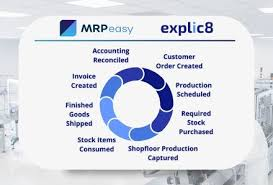
Unlike legacy ERP systems that may require extensive customization and on-premise infrastructure, MRPeasy operates as a Software-as-a-Service (SaaS) platform. This enables remote accessibility and reduces the need for in-house IT maintenance. The system integrates multiple operational layers, including sales orders, bills of materials (BOMs), shop floor control, and financial tracking, into a single workflow.
The platform is typically used in industries such as electronics manufacturing, machinery production, furniture design, and other assembly-based operations where structured production processes are required.
Key Features Explained
Production Planning and Scheduling
One of the central components of MRPeasy is its production planning module. It allows users to create and manage production orders based on demand forecasts or confirmed sales orders. The system uses real-time data to allocate resources, schedule tasks, and estimate completion times.
Dynamic scheduling helps adjust timelines when delays or changes occur, which is particularly relevant in environments with fluctuating order volumes or supply constraints.
Inventory Management
Inventory tracking within MRPeasy is designed to maintain visibility over raw materials, work-in-progress items, and finished goods. The system supports features such as stock level monitoring, batch tracking, and automated replenishment suggestions.
This functionality helps reduce the likelihood of stockouts or overstocking, both of which can disrupt production cycles and increase operational costs.
Bill of Materials (BOM) Management
The platform enables users to define and manage multi-level BOMs, which outline the components and processes required to manufacture a product. This includes materials, labor steps, and routing instructions.
Accurate BOM management is essential for cost estimation, production consistency, and quality control. MRPeasy allows updates to BOMs while maintaining version control, which is useful in iterative product development.
Procurement and Supplier Management
MRPeasy includes tools for managing purchase orders and supplier relationships. Users can generate purchase orders based on production requirements and track supplier performance over time.
The system also supports lead time tracking, which contributes to more accurate production scheduling and inventory planning.
Shop Floor Control
Shop floor functionality provides real-time tracking of production activities. Workers can log time, report progress, and record issues directly into the system.
This level of visibility enables managers to monitor efficiency, identify bottlenecks, and make adjustments as needed. It also contributes to more accurate labor cost calculations.
CRM and Sales Order Management
While primarily focused on manufacturing, MRPeasy includes basic Customer Relationship Management (CRM) features. These allow businesses to manage customer data, track sales orders, and monitor order fulfillment status.
Integration between sales and production ensures that customer orders are directly linked to manufacturing processes, reducing manual data entry and potential errors.
Financial and Reporting Tools
The platform provides reporting features that cover production costs, inventory valuation, and overall operational performance. Some integrations with accounting software are also supported, allowing financial data to be synchronized.
These reports assist in decision-making by offering insights into profitability, efficiency, and resource utilization.
Common Use Cases
Small Manufacturing Businesses Transitioning from Spreadsheets
Many small manufacturers initially rely on spreadsheets for production planning and inventory tracking. As operations scale, these methods become increasingly difficult to manage. MRPeasy is often adopted in such scenarios to replace manual systems with automated workflows.
Custom and Make-to-Order Production
Businesses that produce goods based on specific customer requirements can benefit from MRPeasy’s ability to link sales orders directly to production orders. This ensures that each product is manufactured according to its unique specifications.
Assembly-Based Manufacturing
Companies involved in assembling products from multiple components—such as electronics or mechanical devices—use MRPeasy to manage BOMs, track component usage, and coordinate assembly processes.
Multi-Location Inventory Tracking
For organizations operating across multiple warehouses or production sites, MRPeasy provides centralized inventory visibility. This helps optimize stock distribution and reduce redundancy.
Potential Advantages
Centralized Data Management
By consolidating production, inventory, and sales data into one system, MRPeasy reduces the fragmentation commonly seen in smaller manufacturing setups. This improves data accuracy and simplifies reporting.
Cloud Accessibility
As a cloud-based platform, MRPeasy allows users to access the system from different locations without requiring complex infrastructure. This is particularly useful for distributed teams or remote management.
Scalability for Growing Businesses
The system is designed to accommodate business growth without requiring a complete overhaul of processes. Additional features and integrations can be incorporated as operational needs evolve.
Improved Production Visibility
Real-time tracking of production activities enables better oversight and quicker response to issues. This contributes to more efficient resource utilization and reduced downtime.
Integration Capabilities
MRPeasy can integrate with various third-party tools, including accounting software and e-commerce platforms. This supports a more cohesive digital ecosystem for business operations.
Limitations & Considerations
Learning Curve for New Users
Although MRPeasy is designed to be more accessible than traditional ERP systems, users unfamiliar with MRP concepts may require time to understand its functionalities. Training and onboarding are important for effective use.
Limited Advanced Customization
Compared to large enterprise ERP solutions, MRPeasy may offer fewer customization options. Businesses with highly specialized workflows might find certain constraints in adapting the system to their exact requirements.
Dependency on Internet Connectivity
As a cloud-based solution, MRPeasy relies on stable internet access. Any disruptions in connectivity can affect system availability and operational continuity.
Feature Scope for Large Enterprises
While suitable for SMEs, the platform may not provide the depth of features required by large-scale manufacturing organizations with complex global operations.
Integration Constraints
Although integrations are supported, not all third-party systems may be compatible. Businesses may need to evaluate compatibility with their existing software stack before implementation.
Who Should Consider MRPeasy
MRPeasy is generally suited for small to medium-sized manufacturing companies seeking to digitize and streamline their operations. Organizations that benefit most typically share the following characteristics:
-
Structured production processes with defined workflows
-
A need for improved inventory accuracy and tracking
-
Growing order volumes that exceed manual management capacity
-
Limited IT resources, making cloud-based solutions preferable
-
Interest in integrating production, sales, and procurement data
Startups in manufacturing sectors may also find MRPeasy useful as an initial system for managing operations without investing in more complex ERP infrastructure.
Who May Want to Avoid It
Certain types of organizations may find MRPeasy less aligned with their needs:
-
Large enterprises requiring highly customized ERP systems
-
Businesses with non-manufacturing-focused operations
-
Organizations needing extensive automation beyond standard MRP features
-
Companies operating in industries with highly specialized regulatory requirements
-
Teams lacking the capacity to implement and maintain structured data workflows
In such cases, alternative solutions with broader capabilities or industry-specific features may be more appropriate.
Comparison With Similar Tools
MRPeasy vs Traditional ERP Systems
Traditional ERP systems often provide extensive functionality across multiple business domains, including finance, HR, and supply chain management. However, they tend to be complex, costly, and resource-intensive to implement.
MRPeasy, in contrast, focuses on core manufacturing needs with a simplified interface and faster deployment timeline. This makes it more accessible for smaller organizations, though it may lack the depth required for enterprise-scale operations.
MRPeasy vs Other Cloud-Based MRP Software
Compared to other cloud-based MRP tools, MRPeasy offers a balanced set of features that cover production planning, inventory management, and order tracking. Some competing platforms may provide more advanced analytics or customization options, while others focus on niche manufacturing sectors.
The choice between MRPeasy and similar tools often depends on factors such as company size, production complexity, and integration requirements.
MRPeasy vs Inventory Management Systems
Standalone inventory management systems primarily focus on stock tracking and warehouse operations. While they may offer detailed inventory features, they typically lack production planning capabilities.
MRPeasy integrates inventory management with manufacturing workflows, making it more suitable for businesses that require coordination between stock levels and production schedules.
Final Educational Summary
MRPeasy represents a category of manufacturing software aimed at bridging the gap between manual processes and complex enterprise systems. By integrating production planning, inventory management, procurement, and order tracking into a single platform, it addresses many of the operational challenges faced by small and mid-sized manufacturers.
The system’s cloud-based architecture and modular design make it accessible to organizations with limited technical resources, while its feature set supports a range of manufacturing workflows. However, its suitability depends on the scale and complexity of operations, as well as the organization’s readiness to adopt structured digital processes.
Understanding the capabilities and limitations of MRPeasy within the broader context of MRP and ERP systems can help businesses make informed decisions about their operational tools.