
Introduction
Digital communication strategies have undergone significant transformation as online audiences become more fragmented and less responsive to traditional outreach methods. Email open rates fluctuate, social media algorithms limit visibility, and paid advertising costs continue to rise. In this context, businesses and content publishers increasingly explore alternative channels to maintain consistent engagement with their audiences.
Web push notification platforms have emerged as one such solution. These tools enable websites to send real-time messages directly to users’ devices without requiring email addresses or personal contact details. The approach relies on opt-in permissions and browser-based delivery systems, making it distinct from conventional marketing channels.
Brevo PushOwl represents one example within this category. It operates within the broader ecosystem of browser notification tools designed to help websites communicate updates, alerts, and reminders. Understanding how such tools function—and where they fit within digital strategies—requires examining their features, applications, and limitations in detail.
What Is Brevo PushOwl?
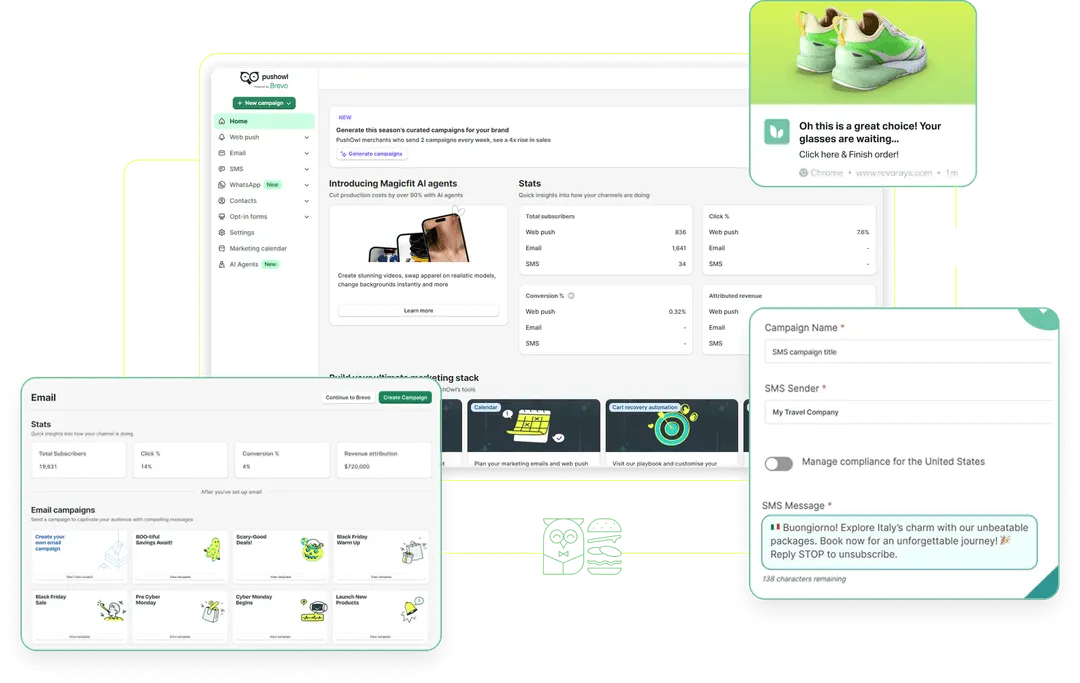
Brevo PushOwl is a web push notification platform designed to facilitate direct communication between websites and their visitors through browser-based alerts. It is part of the broader Brevo ecosystem, which includes tools related to email communication and customer engagement.
At its core, Brevo PushOwl allows website owners to send notifications to users who have opted in via their browser. These notifications appear on desktop or mobile devices even when users are not actively browsing the originating website. The platform integrates with various content management systems and e-commerce platforms, making it accessible to a range of digital properties.
In terms of classification, Brevo PushOwl falls under:
-
Web push notification software
-
Customer engagement tools
-
Marketing automation platforms (specifically for push channels)
Unlike email marketing systems, it does not rely on traditional subscriber lists but instead uses browser-based subscriptions linked to devices. This distinction shapes both its capabilities and its constraints.
Key Features Explained
Browser-Based Notification Delivery
Brevo PushOwl operates through browser notifications, allowing messages to reach users on Chrome, Firefox, Safari, and other supported browsers. Once a visitor grants permission, the system stores a unique identifier rather than personal data such as email addresses.
This approach enables immediate message delivery without requiring users to revisit the website or check an inbox.
Automated Campaign Triggers
The platform includes automation capabilities that allow notifications to be triggered by user behavior. For example:
-
Abandoned browsing sessions
-
Product views without purchase
-
Time-based reminders
These triggers are commonly used in e-commerce and content platforms to maintain engagement after a user leaves the site.
Segmentation and Targeting
Brevo PushOwl supports audience segmentation based on user behavior, location, or interaction patterns. Segmentation helps tailor notifications to specific user groups rather than sending uniform messages to all subscribers.
This feature is particularly relevant in scenarios where personalization is required to improve relevance.
Scheduling and Time Optimization
Users can schedule notifications for specific times or dates. This feature allows coordination with events such as product launches, content releases, or seasonal campaigns.
Time zone-based delivery is also supported, enabling notifications to reach audiences at locally appropriate times.
Analytics and Performance Tracking
The platform provides data related to:
-
Click-through rates
-
Delivery metrics
-
Subscription growth
These analytics help users assess how notifications perform and whether engagement levels meet expectations.
Integration Capabilities
Brevo PushOwl integrates with several platforms, particularly in the e-commerce domain. This includes compatibility with tools that manage online stores, customer data, and marketing workflows.
Integration enables synchronized communication across multiple channels, although the depth of integration may vary depending on the platform used.
Common Use Cases
E-Commerce Notifications
One of the most common applications of Brevo PushOwl is within online retail environments. Notifications may include:
-
Cart abandonment reminders
-
Price drop alerts
-
Back-in-stock notifications
These messages are typically triggered automatically based on user actions.
Content Publishing Alerts
Media websites and blogs use push notifications to inform subscribers about:
-
New articles
-
Breaking news updates
-
Featured content
This use case emphasizes timeliness and frequency, as content updates often occur regularly.
Event and Announcement Updates
Organizations use push notifications to communicate time-sensitive information such as:
-
Event reminders
-
Registration deadlines
-
System updates
This category includes both commercial and informational contexts.
User Engagement and Retention
Push notifications can serve as a re-engagement mechanism, prompting users to return to a website after a period of inactivity. Examples include:
-
Personalized recommendations
-
Reminder notifications
-
Re-engagement campaigns
Potential Advantages
Immediate Communication Channel
Push notifications provide near-instant delivery, allowing websites to communicate updates without delays associated with email delivery or social media visibility constraints.
No Dependency on Email Addresses
Since subscriptions are browser-based, users are not required to share personal contact information. This can reduce friction during the opt-in process.
Cross-Device Reach
Notifications can appear on both desktop and mobile devices, depending on browser support. This broadens the reach of communication efforts.
Automation Efficiency
Automated triggers reduce the need for manual intervention, particularly in scenarios such as abandoned cart recovery or scheduled updates.
Lightweight User Interaction
Compared to email or app-based notifications, browser notifications are relatively lightweight and do not require installation of additional software.
Limitations & Considerations
Opt-In Dependency
The effectiveness of Brevo PushOwl depends entirely on user consent. If visitors decline notification permissions, they cannot be reached through this channel.
Browser Restrictions
Not all browsers support push notifications equally. For example, certain mobile browsers may have limited functionality, which can restrict reach.
Notification Fatigue
Frequent or irrelevant notifications may lead users to disable permissions. Maintaining balance in frequency and content relevance is essential.
Limited Message Format
Push notifications typically have character limits and restricted formatting options. This limits the depth of information that can be conveyed in a single message.
Privacy and Compliance Factors
Although the platform does not rely on email addresses, it still involves user data in the form of browser identifiers. Compliance with data protection regulations may still apply depending on jurisdiction.
Who Should Consider Brevo PushOwl
Brevo PushOwl may be relevant for:
E-Commerce Operators
Online retailers who want to send automated reminders, stock alerts, and promotional updates may find push notifications useful as part of a broader engagement strategy.
Content Publishers
News platforms, blogs, and media outlets that rely on timely updates can use push notifications to maintain reader engagement.
Small to Medium Digital Businesses
Organizations seeking an alternative to email-based communication may explore push notifications as a supplementary channel.
Marketing Teams Focused on Retention
Teams aiming to re-engage existing visitors rather than acquire new ones may find value in browser-based messaging.
Who May Want to Avoid It
Websites With Low Traffic Volume
Push notification systems rely on subscriber growth. Websites with limited visitor numbers may not generate enough subscribers to justify implementation.
Platforms Requiring Detailed Communication
If communication requires long-form explanations or detailed content, push notifications may not be suitable due to format constraints.
Highly Regulated Industries
Organizations operating under strict data compliance frameworks may need to carefully evaluate whether browser-based tracking aligns with their requirements.
Users Sensitive to Notification Interruptions
Audiences that prefer minimal interruptions may be less receptive to push notifications, reducing overall effectiveness.
Comparison With Similar Tools
Brevo PushOwl operates within a competitive landscape that includes several other web push notification platforms. While specific features may overlap, differences often emerge in areas such as integration depth, analytics capabilities, and pricing structures.
Functional Overlap
Most tools in this category provide:
-
Browser-based notifications
-
Automation triggers
-
Basic analytics
-
Segmentation options
Brevo PushOwl aligns with these standard features, making it comparable to other platforms in terms of core functionality.
Integration Ecosystem
Some competing tools emphasize broader integration with marketing platforms, while others focus on niche ecosystems such as specific e-commerce platforms. Brevo PushOwl’s integration with the Brevo suite may be relevant for users already within that ecosystem.
User Interface and Accessibility
Ease of use varies across platforms. Some tools prioritize simplified dashboards, while others offer more complex customization options. The choice often depends on user familiarity and technical requirements.
Pricing Models
Although pricing is not discussed here in detail, web push notification platforms typically use tiered subscription models based on subscriber count or message volume. This structure is consistent across most tools in the category.
Final Educational Summary
Brevo PushOwl represents a specific implementation of web push notification technology, a category designed to address the challenges of modern digital engagement. By enabling direct communication through browser-based alerts, it offers an alternative to traditional channels such as email and social media.
The platform’s features—including automation, segmentation, and analytics—reflect common capabilities within the push notification ecosystem. Its applications span e-commerce, content publishing, and general user engagement, highlighting its versatility across different industries.
However, the effectiveness of such tools depends on several factors, including user opt-in rates, notification relevance, and platform compatibility. Limitations related to message format, browser support, and user preferences must also be considered.
From an educational perspective, Brevo PushOwl serves as an example of how digital communication tools continue to evolve in response to changing user behaviors. Evaluating its role requires understanding both its technical features and its position within broader engagement strategies.
