Introduction
In the contemporary marketing ecosystem, businesses face a persistent challenge: accurately linking consumer interactions to revenue outcomes. Digital and offline channels alike contribute to complex customer journeys, making it difficult for organizations to measure the effectiveness of campaigns. Call tracking and analytics platforms have emerged to address this problem, providing structured insights into how calls, texts, and forms contribute to overall business objectives. Among these solutions, CallRail has gained recognition for its focus on call analytics, conversation intelligence, and lead tracking.
What Is CallRail?
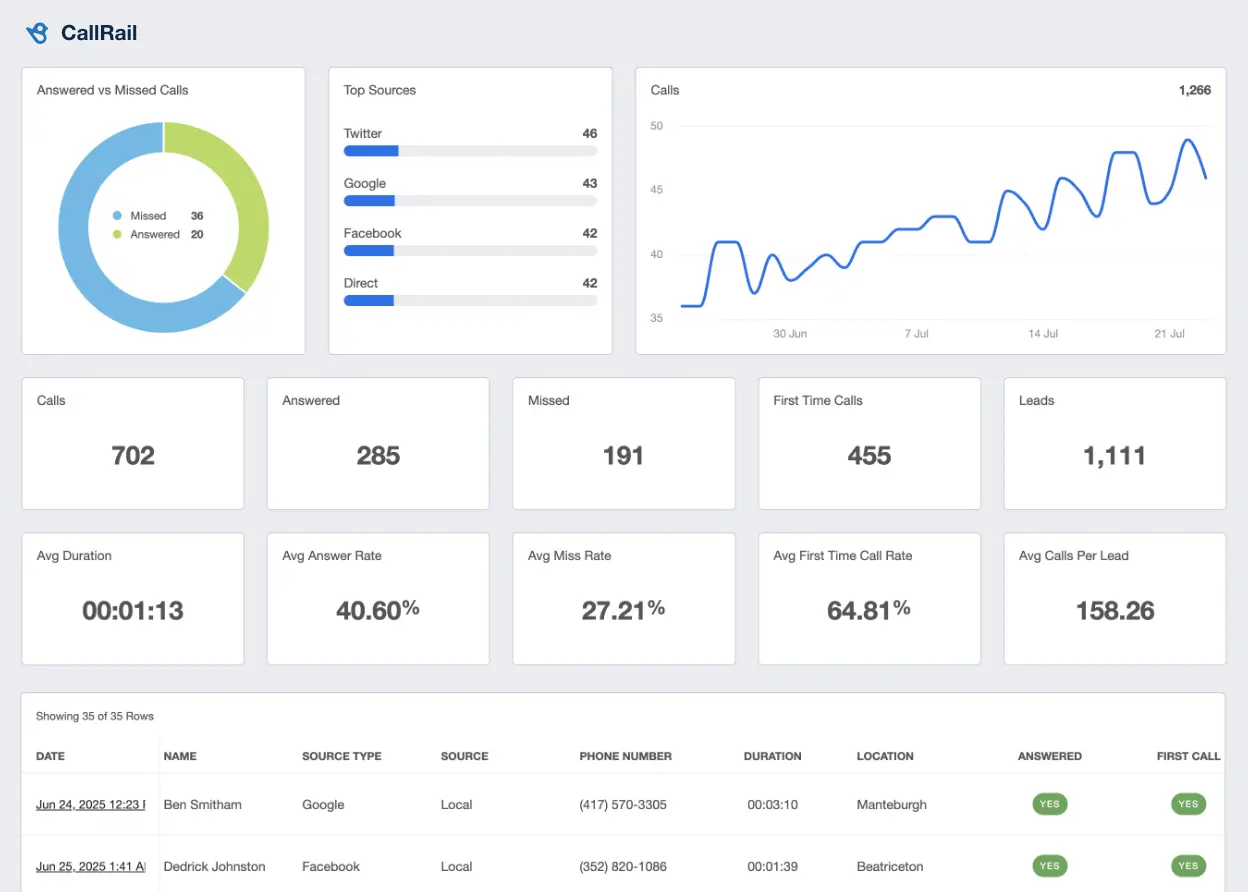
CallRail is a call tracking and analytics platform designed to help organizations understand and optimize customer interactions. It primarily falls within the marketing analytics software category, providing tools to capture data from voice calls, text messages, web forms, and other inbound communication channels. CallRail centralizes this information into a dashboard for analysis, offering metrics that inform campaign strategy and resource allocation.
Key Features Explained
Call and Text Tracking: CallRail enables organizations to track the origin of incoming calls and text messages. Unique phone numbers can be assigned to individual marketing campaigns, allowing precise attribution of interactions.
Form and Chat Analytics: Beyond voice and text, CallRail captures data from web forms and live chat systems, integrating these touchpoints into a unified reporting framework.
Conversation Intelligence: CallRail uses automated transcription and conversation analysis to identify trends in customer interactions. This feature helps organizations understand patterns in inquiries, frequently asked questions, and lead quality.
Lead Scoring: The platform can assess the potential value of leads based on interaction type, duration, and content, providing structured data to prioritize follow-up efforts.
Integrations: CallRail is compatible with numerous marketing and CRM platforms, enabling seamless data flow between different systems and enhancing the breadth of analytics.
Common Use Cases
CallRail is commonly employed in scenarios where organizations need to connect marketing initiatives with measurable outcomes:
Marketing Campaign Attribution: By assigning unique numbers to various channels, organizations can determine which campaigns generate the most customer engagement.
Customer Experience Analysis: Tracking interactions allows companies to analyze response times, conversation patterns, and service quality.
Lead Qualification and Follow-Up: Conversation analysis and lead scoring facilitate the prioritization of high-value inquiries, supporting sales and customer service workflows.
Multi-Channel Analytics: Integrating call data with other channels enables organizations to view the complete customer journey, both online and offline.
Potential Advantages
Enhanced Visibility: Centralizing call, text, and form interactions allows organizations to gain clearer insights into campaign effectiveness.
Data-Driven Decision Making: By quantifying customer interactions, CallRail provides metrics that can guide resource allocation and strategy refinement.
Operational Efficiency: Automated transcription and conversation analysis reduce manual review efforts, saving time for teams.
Cross-Platform Insights: Integration with other tools allows marketing and sales teams to correlate call data with broader campaign performance.
Limitations & Considerations
Dependence on Accurate Number Assignment: Effective attribution requires careful setup of unique numbers for each campaign; misconfiguration can lead to misleading data.
Privacy and Compliance Requirements: Collecting call and text data may involve regulatory considerations, particularly regarding consent and data storage.
Learning Curve: While the platform is designed to be user-friendly, organizations may need time to fully understand reporting features and integration options.
Cost Implications: Depending on the number of tracked interactions and the scale of features used, subscription costs can vary significantly.
Who Should Consider CallRail
Organizations that benefit most from CallRail typically have a multi-channel marketing strategy or substantial inbound call volume. Industries such as home services, healthcare, legal services, and real estate often find value in detailed call analytics and conversation tracking. Marketing agencies managing multiple clients can also use CallRail to provide performance reports and optimize campaign spend.
Who May Want to Avoid It
Small businesses or organizations with minimal call volume and limited marketing campaigns may find the platform’s complexity and costs disproportionate to their needs. Additionally, entities with strict internal data privacy policies may need to evaluate the implications of call and text data storage.
Comparison With Similar Tools
Within the call tracking and marketing analytics space, several tools offer overlapping functionalities:
Invoca: Focuses on AI-driven call tracking for enterprise-level organizations, with deeper analytics but higher complexity.
DialogTech: Offers call conversion tracking and voice analytics, emphasizing integration with advertising platforms.
Marchex: Targets large-scale call analytics, particularly for automotive and retail industries, with specialized lead scoring features.
Compared to these alternatives, CallRail is often noted for its balance between accessibility, multi-channel tracking, and integration capabilities, making it suitable for mid-sized organizations and marketing agencies.
Final Educational Summary
CallRail serves as a comprehensive call tracking and analytics platform that enables organizations to link customer interactions with marketing outcomes. Its suite of features—including call and text tracking, conversation intelligence, form analytics, lead scoring, and integrations—addresses the need for data-driven decision-making in complex marketing environments. While the platform offers clear advantages in operational efficiency and cross-channel visibility, considerations such as accurate setup, regulatory compliance, and subscription costs must be evaluated before adoption. Overall, CallRail exemplifies the type of tool that provides structured insights into the otherwise opaque domain of inbound communications.
Disclosure
Disclosure: This article is for educational and informational purposes only. Some links on this website may be affiliate links, but this does not influence our editorial content or evaluations.