
Introduction
In the digital economy, organizations frequently rely on accurate business contact information to conduct outreach, develop partnerships, and expand professional networks. Sales teams, recruiters, and marketing professionals often depend on verified contact data to identify decision-makers and initiate communication with potential clients or candidates. However, locating reliable business contact details can be difficult. Publicly available information is often incomplete, outdated, or scattered across multiple databases.
To address this challenge, a category of software commonly known as contact intelligence platforms has emerged. These systems aggregate, verify, and organize professional contact information—such as business emails, phone numbers, and company profiles—so that organizations can identify relevant individuals within target companies.
One widely discussed tool in this category is Lusha, a platform designed to provide business contact data and company insights to professionals involved in sales development, recruitment, and market research. Rather than functioning as a customer relationship management system itself, Lusha typically integrates with existing workflows by supplying verified contact information that can be used within broader outreach strategies.
Understanding how platforms like Lusha operate, where they are useful, and what limitations they may carry is important for organizations evaluating tools in the contact intelligence and B2B data ecosystem.
What Is Lusha?
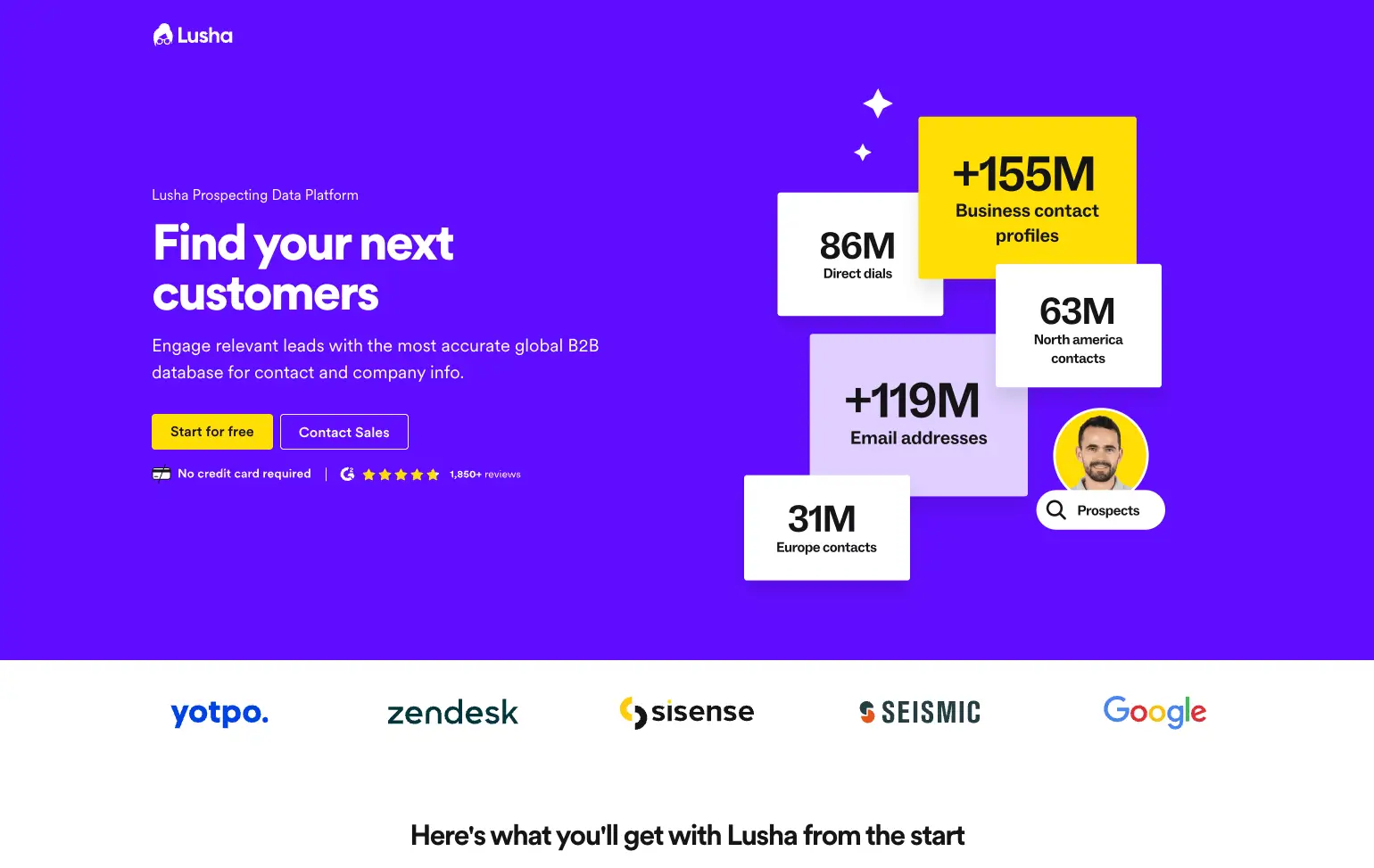
Lusha is a B2B contact intelligence and data enrichment platform that provides access to professional contact details and company information. The platform focuses primarily on identifying business decision-makers and supplying verified data points such as:
-
Business email addresses
-
Direct phone numbers
-
Company details and employee roles
-
Professional profiles connected to organizations
The tool is commonly used alongside professional networking platforms and customer relationship management (CRM) systems. For example, a user might identify a potential prospect through a professional networking site and then use Lusha to retrieve additional contact information.
From a classification standpoint, Lusha belongs to the broader category of:
-
B2B data providers
-
Sales intelligence tools
-
Lead generation software
-
Contact enrichment platforms
The platform generally functions through a combination of browser extensions, web dashboards, and integrations with enterprise tools. Users can search for individuals or companies and retrieve available contact information from the database.
Because data accuracy is central to the usefulness of such tools, platforms like Lusha typically employ multiple verification methods, including cross-referencing public data sources, community contributions, and algorithmic validation processes.
Key Features Explained
Although contact intelligence tools vary widely, Lusha incorporates several commonly recognized features that support business outreach and data enrichment processes.
Contact Data Retrieval
A primary capability of Lusha is the retrieval of business contact information associated with professionals working within companies. This may include direct phone numbers and professional email addresses when available in the platform’s database.
Users often access these details through search functions that allow filtering by company, job title, industry, or geographic region.
Browser Extension Integration
Lusha is frequently used through a browser extension that integrates with professional networking platforms and company websites. When a user views a professional profile, the extension may display additional available contact information linked to that individual.
This integration reduces the need to manually copy or search for data across multiple systems.
Company-Level Insights
In addition to individual contact details, the platform typically includes company data, which may include:
-
Company size
-
Industry classification
-
Headquarters location
-
Organizational structure indicators
Such information can help users identify the appropriate departments or decision-makers within target organizations.
CRM Data Enrichment
Many organizations store lead and customer information inside CRM platforms. Lusha offers data enrichment features designed to fill missing fields in CRM records. For instance, if a company database contains a name and organization but lacks a verified email address, the platform may attempt to supplement that data.
This process can improve the completeness of internal lead databases.
Search and Filtering Tools
Users can often perform targeted searches to identify individuals meeting specific criteria. Filtering parameters may include:
-
Job role or seniority level
-
Industry sector
-
Company size
-
Geographic location
These filters allow professionals to narrow down lists of potential contacts relevant to particular outreach campaigns.
Data Compliance and Privacy Controls
Because the handling of personal data is subject to regulatory oversight in many regions, contact intelligence platforms often incorporate compliance mechanisms. Lusha typically references frameworks such as data privacy regulations and provides tools designed to help organizations manage consent and data removal requests.
However, compliance responsibilities ultimately remain with the organizations using the data.
Common Use Cases
Different professional roles may use contact intelligence platforms in distinct ways. Lusha is commonly associated with several recurring operational scenarios.
Sales Prospecting
Sales development teams frequently search for decision-makers within target companies. By retrieving verified contact details, they can initiate outreach through email or phone channels as part of prospecting activities.
Recruitment and Talent Sourcing
Recruiters sometimes use contact intelligence tools to locate professionals who may not be actively seeking employment but possess relevant experience. Verified contact information enables recruiters to initiate conversations outside traditional job application channels.
Account-Based Marketing Research
Marketing teams conducting account-based marketing (ABM) campaigns often build detailed profiles of target organizations. Access to leadership contacts or department heads can support personalized campaign planning.
Market Research
Analysts performing industry research may use such platforms to identify subject matter experts within organizations for interviews, surveys, or partnership discussions.
Business Development
Partnership managers and business development professionals may use tools like Lusha to identify executives responsible for partnerships, strategy, or procurement within companies of interest.
Potential Advantages
Platforms in the contact intelligence category aim to address practical challenges related to business outreach and data management. When used appropriately, tools such as Lusha may offer several operational advantages.
Centralized Access to Contact Information
One challenge in B2B outreach is the fragmentation of professional data across multiple sources. A contact intelligence platform consolidates this information into a searchable interface, potentially saving time during prospect identification.
Data Enrichment Capabilities
Organizations with incomplete lead records can use enrichment tools to fill missing fields. This process may improve CRM data quality and reduce manual research requirements.
Integration With Existing Workflows
Many users rely on established tools such as CRM platforms, email systems, or professional networking services. Lusha’s integrations allow contact data to be transferred into these systems without extensive manual entry.
Improved Prospect Targeting
Filtering capabilities allow teams to narrow searches based on industry, company size, or job title. This can assist in building prospect lists aligned with specific business criteria.
Scalability for Outreach Teams
As outreach operations expand, manually gathering contact details becomes impractical. Contact intelligence platforms provide scalable access to databases that support larger prospecting efforts.
Limitations & Considerations
While contact intelligence platforms can streamline certain tasks, they also come with important limitations and considerations that organizations should evaluate carefully.
Data Accuracy Variability
No database of professional contact information is perfectly accurate. Business roles change frequently, and email addresses may become inactive. Users should verify critical data before relying on it for high-stakes communication.
Regulatory Compliance Responsibilities
Data protection regulations such as GDPR and other privacy laws impose obligations on organizations that process personal information. Even when using third-party tools, companies remain responsible for ensuring lawful use of data.
Coverage Limitations
Certain industries, geographic regions, or smaller organizations may have limited representation within contact databases. This can affect the completeness of search results.
Dependence on External Data Sources
Contact intelligence platforms rely on aggregated data from multiple sources. Changes in source availability or verification methods may affect database updates over time.
Ethical Considerations in Outreach
Access to contact information does not guarantee that unsolicited outreach will be welcomed by recipients. Organizations should consider communication ethics and appropriate messaging practices when conducting outreach campaigns.
Who Should Consider Lusha
Certain professional roles may find contact intelligence platforms particularly relevant to their operational workflows.
Sales Development Representatives
Sales teams responsible for identifying and contacting new prospects often rely heavily on accurate contact data.
B2B Marketing Teams
Marketing professionals conducting targeted campaigns may benefit from access to company-level insights and relevant contacts within specific departments.
Recruiters and Talent Acquisition Specialists
Professionals involved in executive search or specialized recruitment may use contact intelligence platforms to identify experienced candidates in niche industries.
Business Development Professionals
Individuals responsible for partnerships, strategic alliances, or enterprise negotiations often need direct access to decision-makers within target companies.
Market Analysts and Industry Researchers
Researchers who conduct interviews or gather expert perspectives may use such platforms to identify relevant professionals.
Who May Want to Avoid It
Despite the potential applications, contact intelligence tools may not be appropriate for every organization or use case.
Small Businesses Without Outreach Teams
Organizations that rely primarily on inbound marketing or local networks may not require extensive contact databases.
Privacy-Sensitive Industries
Some sectors operate under strict regulatory frameworks regarding personal data usage. In such cases, organizations may prefer internal databases or consent-based lead generation approaches.
Teams Focused on Organic Lead Generation
Businesses that rely mainly on content marketing, search engine visibility, or inbound inquiries may find less need for outbound contact discovery tools.
Organizations Without CRM Infrastructure
Contact intelligence tools often provide the most value when integrated with CRM systems. Without structured data management, the benefits may be limited.
Comparison With Similar Tools
The contact intelligence and sales data market includes a variety of platforms offering overlapping capabilities. These tools differ in terms of database coverage, integration ecosystems, and verification processes.
Data Aggregation Methods
Some platforms rely heavily on community-contributed data, while others emphasize algorithmic aggregation from public sources. Each approach has trade-offs in terms of scale and verification.
Database Size and Geographic Coverage
Different tools prioritize specific regions or industries. Organizations targeting global markets may evaluate database coverage carefully.
Integration Ecosystems
Sales intelligence tools frequently integrate with CRM platforms, email automation tools, and marketing software. The breadth of these integrations can influence workflow efficiency.
Pricing Structures
Although pricing models vary widely across the industry, many contact intelligence tools use subscription tiers based on the number of data credits or searches available to users.
Data Verification Methods
Accuracy depends largely on how often databases are updated and how verification occurs. Some platforms rely on automated validation, while others combine automated and human review processes.
Because of these variations, organizations often evaluate multiple platforms to determine which best aligns with their operational needs and compliance requirements.
Final Educational Summary
Lusha represents one example within the broader category of B2B contact intelligence platforms, a class of software designed to help organizations identify professional contacts and enrich business data. By providing access to email addresses, phone numbers, and company information, these tools aim to support workflows related to sales prospecting, recruitment, business development, and market research.
The platform’s features—such as contact data retrieval, browser integrations, CRM enrichment capabilities, and search filters—illustrate how contact intelligence tools function as supporting infrastructure rather than standalone business systems. They are typically used alongside CRM platforms, marketing software, and professional networking services.
However, like all aggregated data systems, Lusha operates within limitations related to data accuracy, database coverage, and regulatory compliance responsibilities. Organizations using such tools must evaluate these considerations carefully and ensure that outreach activities align with applicable privacy regulations and ethical communication practices.
Understanding both the potential benefits and the operational constraints of contact intelligence platforms helps businesses determine whether tools like Lusha are suitable components within their broader data and outreach strategies.
