Introduction
Artificial intelligence adoption has expanded rapidly across industries in recent years. Organizations increasingly use machine learning models, natural language processing systems, and data-driven automation to support operational decision-making, customer service processes, analytics workflows, and internal knowledge management. However, integrating artificial intelligence into large-scale organizational environments presents several technical and administrative challenges.
Many companies adopt AI tools incrementally. A department might begin using a language model for document summarization, another team might experiment with predictive analytics, and customer support units may implement automated chat systems. Over time, these separate deployments can lead to fragmented infrastructure where AI tools operate independently without shared governance or centralized coordination.
The absence of structured AI management introduces multiple concerns. Data access policies may become inconsistent, workflows may duplicate functionality, and monitoring how AI systems influence business operations can become difficult. Additionally, enterprises working with regulated or sensitive data often require strict oversight mechanisms to ensure compliance with privacy regulations and internal policies.
To address these challenges, a category of enterprise software platforms has emerged that focuses on coordinating artificial intelligence systems across organizational environments. These platforms function as orchestration layers that connect AI models, enterprise data sources, and operational workflows within a controlled framework. One such platform operating in this space is Airia.
Understanding how Airia works requires examining the broader role of enterprise AI orchestration platforms and how they support the operational deployment of artificial intelligence technologies.
What Is Airia?
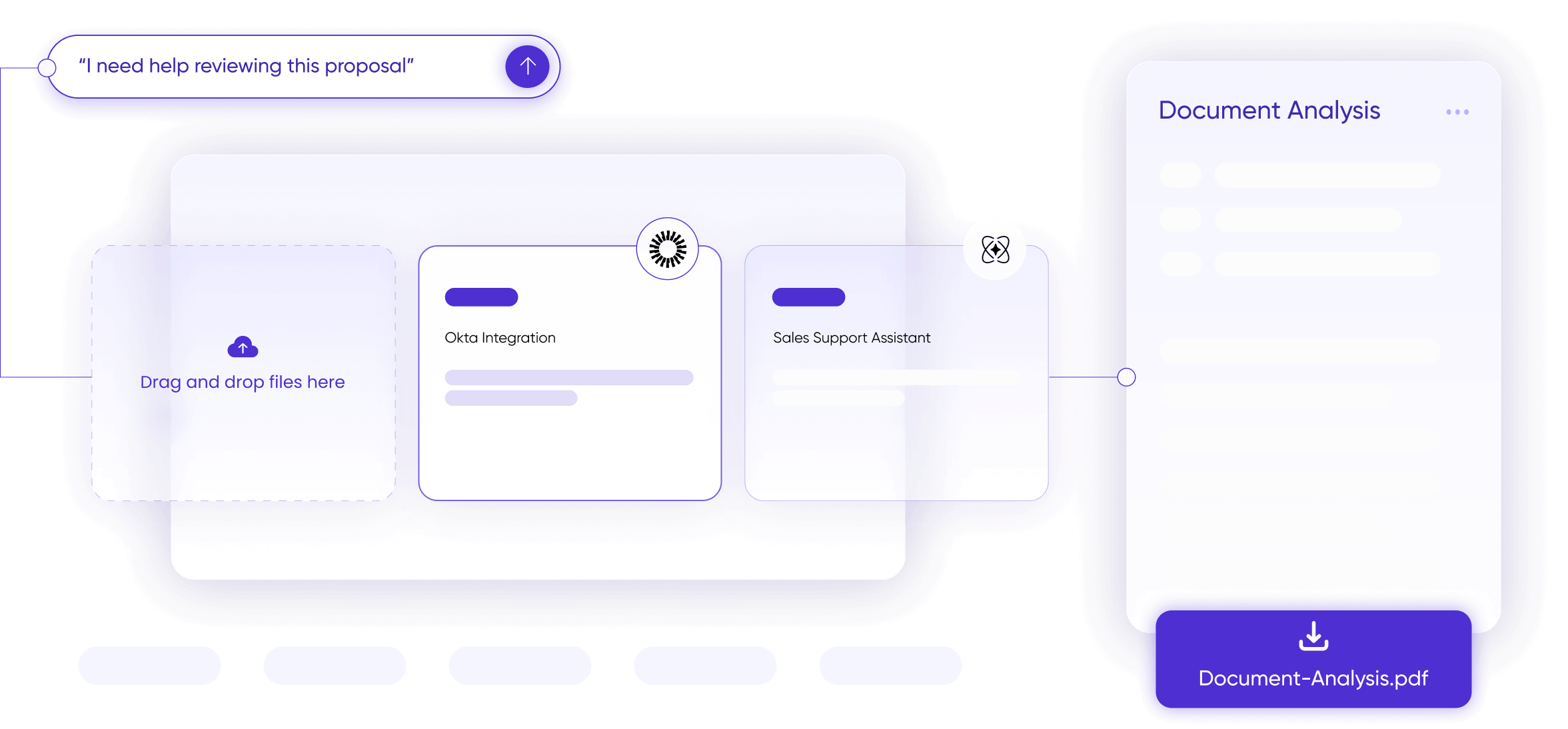
Airia is an enterprise artificial intelligence platform designed to help organizations integrate, manage, and govern AI systems across existing digital infrastructure. Instead of providing a single AI model or standalone application, the platform acts as an intermediary layer that connects multiple AI technologies with business workflows and enterprise software systems.
In technical terms, Airia can be categorized as an AI orchestration and enterprise AI integration platform. Its primary purpose is to enable organizations to coordinate various artificial intelligence models while maintaining control over how these systems interact with company data, internal applications, and automated processes.
Many organizations rely on a combination of AI technologies, including natural language processing models, predictive analytics engines, machine learning pipelines, and generative AI services. Without centralized management, these tools may operate independently, creating fragmented workflows and increasing operational complexity.
Airia attempts to address this issue by providing a structured environment where AI systems can be integrated into existing enterprise processes. The platform focuses on several operational dimensions, including workflow automation, AI system governance, enterprise data connectivity, and controlled access to organizational resources.
Because of these capabilities, Airia is typically positioned within the broader field of enterprise AI infrastructure platforms—software systems designed to support large-scale AI deployment rather than individual experimentation.
Key Features Explained
Enterprise AI orchestration platforms are typically composed of multiple technical components that support integration, governance, and operational deployment. Airia incorporates several features designed to address these requirements within enterprise environments.
Unified AI Model Connectivity
Organizations often use AI services from multiple providers or deploy proprietary machine learning models internally. Connecting these models into consistent workflows can require substantial technical integration work.
Airia provides an environment where different AI models can be connected through unified workflows. This approach allows organizations to coordinate AI-driven tasks across multiple systems rather than managing isolated integrations.
For example, a workflow might combine document analysis models, language processing tools, and data retrieval systems into a single operational process.
Enterprise Workflow Orchestration
Artificial intelligence becomes more useful when integrated directly into business operations. Workflow orchestration tools allow organizations to design processes in which AI models perform specific tasks at different stages of a workflow.
Airia includes functionality that enables teams to create automated workflows incorporating AI-driven analysis, classification, and content generation tasks. These workflows may interact with databases, enterprise applications, or external APIs as part of broader operational pipelines.
Data Access and Security Controls
AI systems require access to organizational data in order to perform analysis or generate outputs. However, uncontrolled data access can create security risks or regulatory concerns.
Airia includes mechanisms that allow administrators to manage how AI systems interact with enterprise data sources. Access permissions, integration policies, and monitoring capabilities help organizations regulate the flow of information between AI models and internal databases.
This type of control is particularly relevant for companies operating in sectors with strict compliance requirements, such as finance, healthcare, or government services.
Integration With Enterprise Software
Modern enterprises typically rely on complex digital ecosystems that include customer relationship management platforms, knowledge management systems, collaboration tools, analytics platforms, and enterprise resource planning software.
Airia is designed to integrate with such systems so that AI workflows can interact with operational data and business processes. Rather than replacing existing software infrastructure, the platform aims to act as a connective layer that enables AI capabilities to function alongside established enterprise tools.
Monitoring and Governance
Responsible AI deployment often requires ongoing oversight of how models are used, what data they process, and how outputs influence operational decisions.
Airia includes monitoring capabilities that allow organizations to track AI activity across workflows. Governance tools help administrators observe how models interact with enterprise systems and provide visibility into AI-driven processes.
Such oversight is particularly important as organizations attempt to align AI usage with internal risk management frameworks and emerging regulatory standards.
Development of Custom AI Applications
In addition to integration features, Airia provides tools that allow organizations to develop internal AI-powered applications. These applications may support tasks such as automated reporting, internal research assistance, data analysis workflows, or knowledge retrieval systems.
The ability to create customized AI solutions enables enterprises to tailor AI functionality to specific operational requirements rather than relying solely on pre-built applications.
Common Use Cases
Airia and similar enterprise AI orchestration platforms are used across various operational scenarios. While implementations differ by industry, several common use cases illustrate how such platforms may function within organizations.
Enterprise Knowledge Retrieval
Large organizations often maintain extensive archives of internal documentation, including policies, research materials, technical documentation, and operational guidelines. Accessing relevant information within these repositories can be difficult without advanced search capabilities.
AI-powered knowledge retrieval systems can analyze internal documents and provide summarized responses to employee queries. Airia can help connect language models to internal document repositories while maintaining controlled access to sensitive materials.
Automated Customer Support Workflows
Customer support operations frequently use AI technologies to categorize requests, generate responses, and assist service agents with information retrieval. However, these systems must interact with customer databases, ticketing platforms, and communication channels.
Airia can serve as an orchestration layer that coordinates AI tools with support infrastructure, enabling automated workflows that assist customer service teams.
Data Processing and Analysis Pipelines
Organizations working with large datasets often deploy machine learning models to identify patterns, detect anomalies, or generate predictive insights. Integrating these models into operational data pipelines requires coordination between data systems and AI services.
Airia may be used to manage these interactions by connecting AI models with enterprise data environments and analytics tools.
Internal Research Assistance
AI-powered research tools can help employees summarize documents, analyze reports, and extract relevant insights from large datasets. Enterprises may use platforms like Airia to integrate generative AI systems with internal knowledge resources.
Compliance and AI Oversight Programs
As artificial intelligence becomes embedded in business operations, organizations increasingly establish governance frameworks to monitor AI usage and ensure responsible deployment.
Airia’s monitoring and oversight features may contribute to these governance initiatives by providing visibility into how AI systems interact with enterprise processes.
Potential Advantages
Enterprise AI orchestration platforms provide several potential operational benefits when deployed in suitable environments.
Centralized AI Infrastructure
A centralized platform can reduce fragmentation by bringing multiple AI tools into a single management framework. This approach simplifies oversight and allows organizations to coordinate AI deployment across departments.
Consistent Data Governance
When AI systems access enterprise data from multiple sources, consistent governance policies become essential. Platforms like Airia can provide unified access controls that apply across different AI workflows.
Integration Efficiency
Building custom integrations between AI tools and enterprise systems can require substantial development effort. AI orchestration platforms often include built-in integration mechanisms that reduce this complexity.
Operational Visibility
Monitoring tools allow organizations to observe how AI models interact with workflows, which can help identify operational inefficiencies or potential compliance concerns.
Scalability
As organizations expand AI usage across departments, centralized orchestration platforms can help scale AI capabilities more systematically.
Limitations & Considerations
Despite their potential advantages, enterprise AI platforms also present several challenges that organizations must consider before implementation.
Technical Complexity
Deploying AI orchestration infrastructure typically requires technical expertise. Integration with enterprise data systems, security configurations, and workflow design may require collaboration between IT teams, data scientists, and software developers.
Implementation Time
Large enterprise systems often require significant configuration and testing before becoming operational. Organizations adopting platforms like Airia may need to allocate time for implementation planning and system integration.
Infrastructure Dependence
The effectiveness of AI orchestration tools depends heavily on the quality of an organization’s existing digital infrastructure. Fragmented data environments or outdated systems may complicate integration efforts.
Resource Requirements
Maintaining enterprise AI platforms can involve ongoing operational costs and resource allocation, including infrastructure management and technical oversight.
Rapid AI Innovation
The artificial intelligence ecosystem evolves quickly, with new models and frameworks emerging frequently. Organizations must ensure that orchestration platforms remain adaptable to changing technologies.
Who Should Consider Airia
Airia may be most relevant for organizations that have already begun integrating artificial intelligence into multiple operational areas. Typical environments where such platforms may be considered include:
-
Large enterprises managing multiple AI deployments
-
Organizations developing internal AI-driven applications
-
Companies seeking structured governance for AI workflows
-
Businesses operating in regulated industries with strict data control requirements
-
Technical teams responsible for enterprise-level AI infrastructure
In these contexts, centralized AI orchestration may help coordinate AI systems across departments while maintaining oversight of how data and workflows interact with machine learning models.
Who May Want to Avoid It
Not every organization requires enterprise AI orchestration platforms. Certain environments may benefit more from simpler AI implementations.
Airia may be less suitable for:
-
Small businesses using a limited number of AI tools
-
Independent developers or researchers experimenting with AI models
-
Organizations without dedicated technical teams
-
Companies still evaluating whether AI technologies are relevant to their operations
In these cases, lightweight AI applications or direct use of AI APIs may provide sufficient functionality without the complexity of enterprise orchestration infrastructure.
Comparison With Similar Airia
Airia operates within a broader ecosystem of enterprise AI infrastructure platforms. Several categories of related tools provide overlapping capabilities.
Machine Learning Development Platforms
Some software environments focus primarily on building and training machine learning models. These platforms emphasize experimentation, data science collaboration, and model lifecycle management. Airia differs by focusing more on deployment integration rather than model training.
Workflow Automation Platforms
Automation platforms integrate digital processes across software systems. Some of these tools incorporate AI capabilities for decision-making tasks. Airia shares similarities with this category but focuses specifically on AI-driven workflows and governance.
AI Governance and Monitoring Tools
Another category includes software dedicated to monitoring AI model performance, fairness metrics, and compliance standards. Airia includes monitoring components but also provides broader infrastructure for AI integration.
Enterprise Integration Platforms
Traditional enterprise integration software connects business systems through APIs and automation pipelines. Airia extends this concept by incorporating AI model orchestration and governance functionality.
As artificial intelligence becomes more embedded in business operations, the boundaries between these categories are increasingly blurred. Many modern platforms combine elements from multiple software disciplines.
Final Educational Summary
Artificial intelligence technologies are increasingly integrated into enterprise environments, where they support a wide range of activities including data analysis, document processing, workflow automation, and customer interaction. However, deploying multiple AI systems across an organization can introduce operational complexity and governance challenges.
Airia is designed to address these challenges by functioning as an enterprise AI orchestration platform. The system provides tools for integrating AI models with enterprise software, managing automated workflows, controlling data access, and monitoring AI activity across organizational processes.
By acting as an intermediary layer between AI technologies and enterprise infrastructure, Airia aims to help organizations coordinate AI deployments within structured governance frameworks. Its features are most relevant for enterprises that already operate multiple AI systems and require centralized oversight.
At the same time, implementing enterprise AI platforms involves technical, operational, and organizational considerations. Their effectiveness depends on factors such as infrastructure maturity, data management practices, and the scale of AI adoption within an organization.
Understanding platforms like Airia contributes to a broader discussion about how businesses manage artificial intelligence responsibly while integrating it into complex operational environments.
Disclosure: This article is for educational and informational purposes only. Some links on this website may be affiliate links, but this does not influence our editorial content or evaluations.